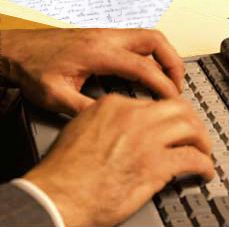
Half, maybe most, of writing is finding faults in one’s own writing, and fixing them, until one finds nothing more to fix. It is an immersion in one’s own flaws, and a constant, unyielding effort to ameliorate them." Lawrence Auster: March 18, 2013
This is the same with all art. Artists will say that once an idea has emerged, one has to fix it until there is nothing more (humanely) possible to fix.
That is the joy, and agony, of art. It is a ruthless companion. It doesn't suffer laziness. Yet, that is how beauty is born.
[Note: Partly because of the length of this article and partly that I have other notes to make regarding the topic (ethnic art) for another post, I missed out on some small - mostly typo - errors in the last update. This should be it! Although you will not have missed the point, and message, of the article.]
Meena Chopra, a poet and artist, officially launched her book of poetry and art SHE! The Restless Streak on August 26 at the Mississauga Central Library with Mayor Bonnie Crombie making the introductory presentation.
Above is a view drawings by artist Meena Chopra's She! The Relentless Streak art exhibit on now at the Mississauga Central Library
Below is Meena Chopra with Mississauga Mayor Bonnie Crombie at the book launch for She! The Relentless Streak, a collection of poems and drawings, on Saturday, September 22, 2018
"My art is my search for the moments beyond the ones of self knowledge. It is the rhythmic fantasy; a restless streak which looks for its own fulfillment! A stillness that moves within! An intense search for my origin and ultimate identity". Source: Meena Chopra's Art World
Below is the completed article from my May 25, 2015 draft Meena Chopra's Ephemera: Art in the Multicultural Era
Meena Chopra is the Indian, Third World Goddess that has evoked Mississauga's awe and wonder.
Chopra knows this.
And she and her world are systematically undermining and curtailing the white West's civilization. She says so, clearly, in this presentation:
World is transitioning into a global village where English language is taking the front seat but not in a traditional British, American or any other way. [KPA Note: I suspect the grammatical deficiency might be because these are the notes she was reading at the lecture, but submitting that for publication is lax and lazy.]
She then continues to talk of the "visual" importance of modern-day communications, neglecting to mention the small fact, or covering it up, that she is reciting her poetry in English words, and much more often than her native country's Hindi words.
But, rather than talk about this usurpation of the English language by non-Anglo worlds, and discussing their variations on the English language, including the addition of many non-English words, she deviates from this by writing:
The biggest influence on new English is of the technological culture and the dynamism of the young who are the creative compelling users of technology.
(I should add here that Chopra's written text is probably the notes she was reading from at the presentation. And for a literary person, one would expect the final, public, version of her transcript not to include so many errors).
She says that now, since the English language has become this universal world language, and where the Third World has appropriated it to suit its cultural needs, a new generation is using it in a very different, visual way, and casting aside the scripted, textual language.
Chopra's thesis that language is getting more "visual" is badly developed. She seems to support at times the linguistic idea and at others the visual one. She exemplifies the intellectual laxness of these non-Western sophisticates. But it could be more astute than mere laziness. Her Hindi culture, despite its very well evolved written language, is still a culture of visuals. And with large parts of the population illiterate, or close to illiterate, only the elite educated would be able to read her books. And it is probably the same elite which is educated in advanced English and which could also read her books in English. And there is the major problem in India of the myriad of competing "national" languages. Not all (elite) Indians can speak Hindi fluently, but all elite Indians can speak English fluently (or with close to fluency).
And many elite Indians, including her, have travelled the thousands of miles across oceans to arrive at Canadian shores, manipulating all the tricks in the immigration how-to book, and with full assistance from Canadians themselves.
But these immigrants have come to invade and take over a country which let them in through peaceful acquiescence. Which is the more incredible: that they came at all, abandoning country, culture, peoples and ancestors, for opportunistic gains, or that they were let in without a single fight?
And once here, since their agenda, implicit, complicit, deliberate or instinctive, is a take-over and a transformation of this country so it resembles the one they left behind, they wll be incessant critics of everything Canadian, until things start to change according to their prescriptions. Until things start to look like them.
But what happens when this world does begin to change, and it beings to resemble their native lands? What happens when the sophistications they expect began to erode? What happens, for example, when first-class libraries as the Mississauga Central Library, which shelves their multicultural prize-winning books, is no longer the efficient and organized entity which we all unquestioningly expect it to be, and the literary sophisticates, Indians and whites, can no longer find where their books are stacked, since although the computerized system says "it is there" the book is conspicuously absent from the shelves?
What will they do with their criticisms then, their multicultural agendas, their dismissal and eradication of the culture for which they traveled thousands of miles to make sure that their books were shelved on the right spot in the public library so that people, they, could read them.
The literary textual world, the subject of Chopra's flippant verses, may not come to her rescue. But she is ready for that. She already has her faithful, complicit, visuals ready.
Chopra with at the launch of her book of poems and drawings SHE! The Restless Streak
on September 22 2018 at the Mississauga Central Library,
with the display of the drawings on the background wall
[Image source: Mississauga Library Twitter page]
Marian Kutarna with Chopra, holding Chopra's book of poems Ignited Lines.
Chopra's 2010 poetry reading and book launch
where she recited in Hindi and in English "Adieu to the Dawn" at her book launch
on February 2010 at a Mississauga Central Library event.
Marian Kutarna, then manager of the History & Art department (now manager of library circulation), says, after Chopra read one of her poems in Hindi:
"The sound of a language is poetry. The human heart is the same heart in all of us."
Followed by a round of applause.
Below is the more complete video from which Kutarna's excerpt (from 1:45 min - 3:30 min) is taken:
Glimpses of the Setting Sun - A multilingual poetry celebration
Book Launch and Art Exhibition
Sunday February 28, 2010, 2 pm - 4 pm
Mississauga Central Library, Mississauga, Ontario, Canada
But I find Chopra uncomfortable with the Kutarna's effusive admiration. Chopra make subtle and begrudging jabs at the English and American civilizations and language (which she posts at her blog - I've posted the full article at the end of this blog as well as a bref excerpt above) to whom she owes everything for her highly lucrative and esteemed literary life in Canada.
Chopra is of course a seasoned ethnicist, who has used Canada's infrastructure to its maximum. She is "Friend of the Library" at its most opportunistic.
Below is Chopra reading a poem with those special sounds that Kutarna found so compelling (and incomprehensible!).
I saw a collection of Chopra's paintings and drawings at the Living Arts Centre here in Mississauga. The center is trying to promote the various arts, and has a full-scale concert hall, a gallery, and various artists' workshops. It is quite a formidable building. I saw Chopra's work hanging somewhere in the gallery, and looking online, I realized it was at the LIVE Restaurant, which is mostly used for after-concert meals and refreshments.
Art and Gastronomie
Chopra's works hanging above wine glasses and folded napkins: the epitome of Western sophistication,
but with the Eastern content
Hanging here are oil paintings "Hope" and "Afloat"
and selling for $285
The center, including the restaurant, is partially funded by government grants, and is losing money, and is accepting all kinds of events to cover its costs. One recent one was a body builders' gathering, where strange, inflated humans were circling around the hallway. Anothers is to hold various ethnic festivals, and their programs includes a recent presentation by a Chinese circus and an Indian religious event to celebrate one of their gods. Chopra's program fits that bill.
Chopra's works at LIVE were:
"SHE: A Restless Streak" Art Show by Meena Chopra
CELEBRATING THE SPIRIT OF WOMANHOOD
At:
"Live Cuisine" at Living Arts Centre Mississauga from March 9, 2015 until May 25, 2015.
4141 Living Arts Drive, Mississauga, Ontario
Mississauga, Ontario L5B
9th to 25th May
10:30am to 5:30pm everyday
Below is a drawing hanging at the LIVE restaurant, but which I also found online. The photograph of her paintings hanging in the restaurant is what I took, as well as the view of the LIVE restaurant's entrance.
Drawing:
Meena Chopra
Pastel on paper 11'x8"
From Chopra's series: She: A Restless Streak
Poem
Excerpt from Chopra's poem Iconoclast (full poem below)
The real in her
longs to be
revealed through layers
seeking identifications
undraped
in a figureless
formless existence.
Iconoclast
Is she a vase
or a statue on a pedestal ?
She is no icon!
Her feet strong
firm on ground.
The earth supports her.
The real in her
longs to be
revealed through layers
seeking identifications
undraped
in a figureless
formless existence.
In vain,
she searches - an iconoclast,
beyond the turbidity of love.
Will she find one in you ?
Is this the forceful Hindu Goddess, the statue on a pedestal, that Kutarna is looking for? Will she find this figureless, formless, elusive creature?
Chopra may present herself as a modern, progressive oriental with Western ideas. But, as we look deeper into her thoughts, she remains much more Indian than Western. And she is not forthright with Kutarna, whom she will surely abandon when her authentic "identity" trumps pleasantries, leaving Kutarna with nothing but those incomprehensible sounds.
An Indian Woman at the LIVE Restaurant
At one time (about a year ago) the restaurant had changed its buffet style menu from an exclusively European menu and had added one or two Indian dishes. I asked recently about booking the restaurant, and found out that one of the chefs was Indian. When I looked at the buffet, the menu included only one Indian dish, and that was a simple chickpea dip. I asked to meet the chef to inquire about group rates, and was introduced to what looked like a cook. "You can order anything you want. Yes, we can do Indian dishes, butter chicken, anything."
My conclusion was that the attempt to turn this wonderful little place into an Indian/ethnic restaurant didn't work. How many folk festivals are there going to be, and how many are "inclusive" enough to attract a wider audience than just Indians?
Chopra's work is hardly that of the goddess/artist of Kutarna's eulogy. She has managed to convince the ethnicist Indians who still require the admiration of white Canadians - and they got one at least via Kutarna, and those multi-culti whites who still run the organizations - that she is worthy of their attention. And, following the multi-culti/ethnicist recipe, that is not hard to do. I don't doubt that Chopra has artistic ability, but she wouldn't have reached such a level of recognition hadn't she had all these underlying "qualities," and all that "support."
Chopra with her painting Eyes of Time, with a snake-like sign on her forehead [Image Source: The Hamilton Spectator, Sept. 2017]
Chopra eschews the bindi, a traditional decorative red dot painted on the forehead. Instead, she paints a bold black snake figure in its place. Like the bold images of her paintings, it has what she calls her “artistic signature.“ It is me,” she said. “It is a part of who I am.” [Image and text source: Toronto Star, August 9, 2010]
Note: "Celebrating 150 years of Canada" was a nationwide observance of many types of events and festivals commemorating the 150th anniversary of the country's Confederation
“Aankhen uthin to dekha kaynaat jal rahi thi
jab ye jhukin to tum the aur kuchh bhi nahin”
Roughly translated from Hindi:
When the eyes rose outwardly they saw the entire universe aflame.
When they opened inwards, it was you (the one reality of life) and nothing but you.
(From Chopra's Hindi poem And Nothing Else)
Art Exhibition: EYES OF TIME - The eye as a channel into the new dimensions of life.
By Artist and Author Meena Chopra
(Celebrating 150 years of Canada)
“Eyes wear the wings of time to fly beyond the cry of human desires, reveries and the realities,
penetrating the boundaries of the visible universe into the unknown, invisible realms".
Exhibition is on view from 8th August to 15th September 2017
Venue: Heritage Mississauga 1921 Dundas St W, Mississauga
Below is text from Chopra's writing from her blog page written in 2013. I tried to shorten it, but I think it should be read in its full, error-filled (for a wordmonger! but she does tell us of her Hindi bias) totality to understand in the scope of its message:
----------------------------------------------------------------------------------------------------------------------- One World, One English, The Many Languages of the Imagination
World is transitioning into a global village where English language is taking the front seat but not in a traditional British, American or any other way. It is evolving with variety of different realistic cultural influences. The biggest influence on new English is of the technological culture and the dynamism of the young who are the creative compelling users of technology. The idiom and syntax are changing fast.
Manifestation of the subtle thought imaging is taking over directly from the mental sound vibrations in a language where we have started expressing in symbols like smilyes, pictograms and info-graphics etc. This visual expression of subtle thought is the immediate outer expression of our mental imagery perhaps descended on us from that one ultimate sound vibration (Shabd Brahm). The entire generation is on the thresh hold of being more and more visual in their expression of thought.
Underneath this visual explosion, English, with its new tools of expression is threading the beads of different languages so to speak, where the images of mind in their visual expression have started taking the lead.
What language does imagination has? It is a question that eludes many of us. Whatever way our creativity gets stimulated, according to the researchers, as humans our thinking is mostly in images and is visual. To add, from generations, powerful imagery has always been an intrinsic part of any creative writing which actually surpasses the barriers of language and language becomes a medium of creative expression.
Einstein said that he always thought in images, in his words, "I very rarely think in words. A thought comes, and I may try to express it in words afterwards,"
So what we have observed with any of our senses, we can imagine; what we imagine, we image.
Traditionally in a country like Canada with its English predominance, linguistic diversity definitely breaks down the barriers to intercultural dialogue and promotes multilingualism as a fundamental tool for the prosperity of literature. Linguistic diversity also contributes to enhancing creativity and innovation at all levels of education and learning. There is a clear link between multilingualism and creativity because knowledge of languages gives access to other ways of thinking and to other cultures as well, reinforcing our creative capacities. This in turn has a positive impact on innovation.
In the changing environment where English is the predominant world language, Hindi like many other languages of the world is also transforming. It is becoming richer because of cultural influences for both in its usage, vocabulary and expressiveness. English language definitely has a major influence on Hindi as well as it has on many other languages in many ways.
There are many remarkable Hindi literary blogs on the net. It is adapting very well to the transition and the idiom. This change is inevitable with technological progression where English is predominant.
Some facts and observations about Hindi language:
- After Chinese, Hindi is the maximum spoken language of the world.
- Hindi has been one of the first languages which was picked up by Google when they started adding and introducing languages to the net for a wider usage of technology with languages.
- Instant Google translations are available at hand for all languages.
Hindi Writers' Guild, the organization I represent here, was formed in June 2008. It is the first of its kind multi-faceted organization in Canada. Its prime objective is to educate and increase public understanding of Hindi literature and the language, also to develop the writing skills in Hindi language. Organization promotes South Asian writers and literature through seminars, lectures and conferences etc. Computer literacy and promotion of book publication in Canada are the main intents of Hindi Writers’ Guild.
To elaborate the organization is involved in the following:
- GUIDANCE IN THE ART OF HINDI WRITING AND HINDI LITERATURE
- FACILITATION OF COMPUTER LITERACY IN HINDI WRITING
- FACILITATION OF EDITING AND PUBLICATION OF HINDI BOOKS
- TRANSLATION AND PUBLICATION OF NON - HINDI LITERATURE IN HINDI
- ARRANGING LECTURES BY EMINENT LAUREATES ON HINDI LITERATURE, BUSINESS, ENVIRONMENT AND PHILOSOPHY
- HOLDING BOOK EXHIBITIONS, PUBLIC SEMINARS AND CONFERENCES TO PROMOTE HINDI LANGUAGE AND LITERATURE
- PROVIDE TRANSLATION SERVICES FOR HOSPITALS AND OTHER INSTITUTIONS FOR INDIVIDUALS WHOSE MOTHER TONGUE IS NOT ENGLISH
- LIAISON AND COLLABORATION WITH CHARITABLE ORGANIZATIONS, NON-PROFIT COMMUNITY, GOVERNMENT AGENCIES, EDUCATIONAL INSTITUTIONS IN THE DEVELOPMENT OF PROGRAMS RELATING TO HINDI LANGUAGE AND HINDI LITERATURE
- HELPING IMMIGRANTS ASSIMILATE INTO CANADIAN SOCIETY BY DEVELOPING HINDI INDO-CANADIAN LITERATURE IN CANADIAN PERSPECTIVE
- MAINTAINING HINDI WEB-SITE FOR E-MAGAZINE AND E-LIBRARY FOR MEMBERS
[Note: Partly because of the length of this article and partly that I have other notes to make regarding the topic (ethnic art) for another post, I missed out on some small - mostly typo - errors in the last update. This should be it! Although you will not have missed the point, and message, of the article.]
Meena Chopra, a poet and artist, officially launched her book of poetry and art SHE! The Restless Streak on August 26 at the Mississauga Central Library with Mayor Bonnie Crombie making the introductory presentation.
Above is a view drawings by artist Meena Chopra's She! The Relentless Streak art exhibit on now at the Mississauga Central Library
Below is Meena Chopra with Mississauga Mayor Bonnie Crombie at the book launch for She! The Relentless Streak, a collection of poems and drawings, on Saturday, September 22, 2018
"My art is my search for the moments beyond the ones of self knowledge. It is the rhythmic fantasy; a restless streak which looks for its own fulfillment! A stillness that moves within! An intense search for my origin and ultimate identity". Source: Meena Chopra's Art World
Below is the completed article from my May 25, 2015 draft Meena Chopra's Ephemera: Art in the Multicultural Era
Meena Chopra is the Indian, Third World Goddess that has evoked Mississauga's awe and wonder.
Chopra knows this.
And she and her world are systematically undermining and curtailing the white West's civilization. She says so, clearly, in this presentation:
World is transitioning into a global village where English language is taking the front seat but not in a traditional British, American or any other way. [KPA Note: I suspect the grammatical deficiency might be because these are the notes she was reading at the lecture, but submitting that for publication is lax and lazy.]
She then continues to talk of the "visual" importance of modern-day communications, neglecting to mention the small fact, or covering it up, that she is reciting her poetry in English words, and much more often than her native country's Hindi words.
But, rather than talk about this usurpation of the English language by non-Anglo worlds, and discussing their variations on the English language, including the addition of many non-English words, she deviates from this by writing:
The biggest influence on new English is of the technological culture and the dynamism of the young who are the creative compelling users of technology.
(I should add here that Chopra's written text is probably the notes she was reading from at the presentation. And for a literary person, one would expect the final, public, version of her transcript not to include so many errors).
She says that now, since the English language has become this universal world language, and where the Third World has appropriated it to suit its cultural needs, a new generation is using it in a very different, visual way, and casting aside the scripted, textual language.
Chopra's thesis that language is getting more "visual" is badly developed. She seems to support at times the linguistic idea and at others the visual one. She exemplifies the intellectual laxness of these non-Western sophisticates. But it could be more astute than mere laziness. Her Hindi culture, despite its very well evolved written language, is still a culture of visuals. And with large parts of the population illiterate, or close to illiterate, only the elite educated would be able to read her books. And it is probably the same elite which is educated in advanced English and which could also read her books in English. And there is the major problem in India of the myriad of competing "national" languages. Not all (elite) Indians can speak Hindi fluently, but all elite Indians can speak English fluently (or with close to fluency).
And many elite Indians, including her, have travelled the thousands of miles across oceans to arrive at Canadian shores, manipulating all the tricks in the immigration how-to book, and with full assistance from Canadians themselves.
But these immigrants have come to invade and take over a country which let them in through peaceful acquiescence. Which is the more incredible: that they came at all, abandoning country, culture, peoples and ancestors, for opportunistic gains, or that they were let in without a single fight?
And once here, since their agenda, implicit, complicit, deliberate or instinctive, is a take-over and a transformation of this country so it resembles the one they left behind, they wll be incessant critics of everything Canadian, until things start to change according to their prescriptions. Until things start to look like them.
But what happens when this world does begin to change, and it beings to resemble their native lands? What happens when the sophistications they expect began to erode? What happens, for example, when first-class libraries as the Mississauga Central Library, which shelves their multicultural prize-winning books, is no longer the efficient and organized entity which we all unquestioningly expect it to be, and the literary sophisticates, Indians and whites, can no longer find where their books are stacked, since although the computerized system says "it is there" the book is conspicuously absent from the shelves?
What will they do with their criticisms then, their multicultural agendas, their dismissal and eradication of the culture for which they traveled thousands of miles to make sure that their books were shelved on the right spot in the public library so that people, they, could read them.
The literary textual world, the subject of Chopra's flippant verses, may not come to her rescue. But she is ready for that. She already has her faithful, complicit, visuals ready.
Chopra with at the launch of her book of poems and drawings SHE! The Restless Streak
on September 22 2018 at the Mississauga Central Library,
with the display of the drawings on the background wall
[Image source: Mississauga Library Twitter page]
Marian Kutarna with Chopra, holding Chopra's book of poems Ignited Lines.
Chopra's 2010 poetry reading and book launch
where she recited in Hindi and in English "Adieu to the Dawn" at her book launch
on February 2010 at a Mississauga Central Library event.
Marian Kutarna, then manager of the History & Art department (now manager of library circulation), says, after Chopra read one of her poems in Hindi:
"The sound of a language is poetry. The human heart is the same heart in all of us."
Followed by a round of applause.
Below is the more complete video from which Kutarna's excerpt (from 1:45 min - 3:30 min) is taken:
Glimpses of the Setting Sun - A multilingual poetry celebration
Book Launch and Art Exhibition
Sunday February 28, 2010, 2 pm - 4 pm
Mississauga Central Library, Mississauga, Ontario, Canada
But I find Chopra uncomfortable with the Kutarna's effusive admiration. Chopra make subtle and begrudging jabs at the English and American civilizations and language (which she posts at her blog - I've posted the full article at the end of this blog as well as a bref excerpt above) to whom she owes everything for her highly lucrative and esteemed literary life in Canada.
Chopra is of course a seasoned ethnicist, who has used Canada's infrastructure to its maximum. She is "Friend of the Library" at its most opportunistic.
Below is Chopra reading a poem with those special sounds that Kutarna found so compelling (and incomprehensible!).
I saw a collection of Chopra's paintings and drawings at the Living Arts Centre here in Mississauga. The center is trying to promote the various arts, and has a full-scale concert hall, a gallery, and various artists' workshops. It is quite a formidable building. I saw Chopra's work hanging somewhere in the gallery, and looking online, I realized it was at the LIVE Restaurant, which is mostly used for after-concert meals and refreshments.
Art and Gastronomie
Chopra's works hanging above wine glasses and folded napkins: the epitome of Western sophistication,
but with the Eastern content
Hanging here are oil paintings "Hope" and "Afloat"
and selling for $285
The center, including the restaurant, is partially funded by government grants, and is losing money, and is accepting all kinds of events to cover its costs. One recent one was a body builders' gathering, where strange, inflated humans were circling around the hallway. Anothers is to hold various ethnic festivals, and their programs includes a recent presentation by a Chinese circus and an Indian religious event to celebrate one of their gods. Chopra's program fits that bill.
Chopra's works at LIVE were:
"SHE: A Restless Streak" Art Show by Meena Chopra
CELEBRATING THE SPIRIT OF WOMANHOOD
At:
"Live Cuisine" at Living Arts Centre Mississauga from March 9, 2015 until May 25, 2015.
4141 Living Arts Drive, Mississauga, Ontario
Mississauga, Ontario L5B
9th to 25th May
10:30am to 5:30pm everyday
Below is a drawing hanging at the LIVE restaurant, but which I also found online. The photograph of her paintings hanging in the restaurant is what I took, as well as the view of the LIVE restaurant's entrance.
Drawing:
Meena Chopra
Pastel on paper 11'x8"
From Chopra's series: She: A Restless Streak
Poem
Excerpt from Chopra's poem Iconoclast (full poem below)
The real in her
longs to be
revealed through layers
seeking identifications
undraped
in a figureless
formless existence.
Iconoclast
Is she a vase
or a statue on a pedestal ?
She is no icon!
Her feet strong
firm on ground.
The earth supports her.
The real in her
longs to be
revealed through layers
seeking identifications
undraped
in a figureless
formless existence.
In vain,
she searches - an iconoclast,
beyond the turbidity of love.
Will she find one in you ?
Is this the forceful Hindu Goddess, the statue on a pedestal, that Kutarna is looking for? Will she find this figureless, formless, elusive creature?
Chopra may present herself as a modern, progressive oriental with Western ideas. But, as we look deeper into her thoughts, she remains much more Indian than Western. And she is not forthright with Kutarna, whom she will surely abandon when her authentic "identity" trumps pleasantries, leaving Kutarna with nothing but those incomprehensible sounds.
An Indian Woman at the LIVE Restaurant
At one time (about a year ago) the restaurant had changed its buffet style menu from an exclusively European menu and had added one or two Indian dishes. I asked recently about booking the restaurant, and found out that one of the chefs was Indian. When I looked at the buffet, the menu included only one Indian dish, and that was a simple chickpea dip. I asked to meet the chef to inquire about group rates, and was introduced to what looked like a cook. "You can order anything you want. Yes, we can do Indian dishes, butter chicken, anything."
My conclusion was that the attempt to turn this wonderful little place into an Indian/ethnic restaurant didn't work. How many folk festivals are there going to be, and how many are "inclusive" enough to attract a wider audience than just Indians?
Chopra's work is hardly that of the goddess/artist of Kutarna's eulogy. She has managed to convince the ethnicist Indians who still require the admiration of white Canadians - and they got one at least via Kutarna, and those multi-culti whites who still run the organizations - that she is worthy of their attention. And, following the multi-culti/ethnicist recipe, that is not hard to do. I don't doubt that Chopra has artistic ability, but she wouldn't have reached such a level of recognition hadn't she had all these underlying "qualities," and all that "support."
Chopra with her painting Eyes of Time, with a snake-like sign on her forehead [Image Source: The Hamilton Spectator, Sept. 2017]
Chopra eschews the bindi, a traditional decorative red dot painted on the forehead. Instead, she paints a bold black snake figure in its place. Like the bold images of her paintings, it has what she calls her “artistic signature.“ It is me,” she said. “It is a part of who I am.” [Image and text source: Toronto Star, August 9, 2010]
Note: "Celebrating 150 years of Canada" was a nationwide observance of many types of events and festivals commemorating the 150th anniversary of the country's Confederation
“Aankhen uthin to dekha kaynaat jal rahi thi
jab ye jhukin to tum the aur kuchh bhi nahin”
Roughly translated from Hindi:
When the eyes rose outwardly they saw the entire universe aflame.
When they opened inwards, it was you (the one reality of life) and nothing but you.
(From Chopra's Hindi poem And Nothing Else)
Art Exhibition: EYES OF TIME - The eye as a channel into the new dimensions of life.
By Artist and Author Meena Chopra
(Celebrating 150 years of Canada)
“Eyes wear the wings of time to fly beyond the cry of human desires, reveries and the realities,
penetrating the boundaries of the visible universe into the unknown, invisible realms".
Exhibition is on view from 8th August to 15th September 2017
Venue: Heritage Mississauga 1921 Dundas St W, Mississauga
Below is text from Chopra's writing from her blog page written in 2013. I tried to shorten it, but I think it should be read in its full, error-filled (for a wordmonger! but she does tell us of her Hindi bias) totality to understand in the scope of its message:
----------------------------------------------------------------------------------------------------------------------- One World, One English, The Many Languages of the Imagination
World is transitioning into a global village where English language is taking the front seat but not in a traditional British, American or any other way. It is evolving with variety of different realistic cultural influences. The biggest influence on new English is of the technological culture and the dynamism of the young who are the creative compelling users of technology. The idiom and syntax are changing fast.
Manifestation of the subtle thought imaging is taking over directly from the mental sound vibrations in a language where we have started expressing in symbols like smilyes, pictograms and info-graphics etc. This visual expression of subtle thought is the immediate outer expression of our mental imagery perhaps descended on us from that one ultimate sound vibration (Shabd Brahm). The entire generation is on the thresh hold of being more and more visual in their expression of thought.
Underneath this visual explosion, English, with its new tools of expression is threading the beads of different languages so to speak, where the images of mind in their visual expression have started taking the lead.
What language does imagination has? It is a question that eludes many of us. Whatever way our creativity gets stimulated, according to the researchers, as humans our thinking is mostly in images and is visual. To add, from generations, powerful imagery has always been an intrinsic part of any creative writing which actually surpasses the barriers of language and language becomes a medium of creative expression.
Einstein said that he always thought in images, in his words, "I very rarely think in words. A thought comes, and I may try to express it in words afterwards,"
So what we have observed with any of our senses, we can imagine; what we imagine, we image.
Traditionally in a country like Canada with its English predominance, linguistic diversity definitely breaks down the barriers to intercultural dialogue and promotes multilingualism as a fundamental tool for the prosperity of literature. Linguistic diversity also contributes to enhancing creativity and innovation at all levels of education and learning. There is a clear link between multilingualism and creativity because knowledge of languages gives access to other ways of thinking and to other cultures as well, reinforcing our creative capacities. This in turn has a positive impact on innovation.
In the changing environment where English is the predominant world language, Hindi like many other languages of the world is also transforming. It is becoming richer because of cultural influences for both in its usage, vocabulary and expressiveness. English language definitely has a major influence on Hindi as well as it has on many other languages in many ways.
There are many remarkable Hindi literary blogs on the net. It is adapting very well to the transition and the idiom. This change is inevitable with technological progression where English is predominant.
Some facts and observations about Hindi language:
- After Chinese, Hindi is the maximum spoken language of the world.
- Hindi has been one of the first languages which was picked up by Google when they started adding and introducing languages to the net for a wider usage of technology with languages.
- Instant Google translations are available at hand for all languages.
Hindi Writers' Guild, the organization I represent here, was formed in June 2008. It is the first of its kind multi-faceted organization in Canada. Its prime objective is to educate and increase public understanding of Hindi literature and the language, also to develop the writing skills in Hindi language. Organization promotes South Asian writers and literature through seminars, lectures and conferences etc. Computer literacy and promotion of book publication in Canada are the main intents of Hindi Writers’ Guild.
To elaborate the organization is involved in the following:
- GUIDANCE IN THE ART OF HINDI WRITING AND HINDI LITERATURE
- FACILITATION OF COMPUTER LITERACY IN HINDI WRITING
- FACILITATION OF EDITING AND PUBLICATION OF HINDI BOOKS
- TRANSLATION AND PUBLICATION OF NON - HINDI LITERATURE IN HINDI
- ARRANGING LECTURES BY EMINENT LAUREATES ON HINDI LITERATURE, BUSINESS, ENVIRONMENT AND PHILOSOPHY
- HOLDING BOOK EXHIBITIONS, PUBLIC SEMINARS AND CONFERENCES TO PROMOTE HINDI LANGUAGE AND LITERATURE
- PROVIDE TRANSLATION SERVICES FOR HOSPITALS AND OTHER INSTITUTIONS FOR INDIVIDUALS WHOSE MOTHER TONGUE IS NOT ENGLISH
- LIAISON AND COLLABORATION WITH CHARITABLE ORGANIZATIONS, NON-PROFIT COMMUNITY, GOVERNMENT AGENCIES, EDUCATIONAL INSTITUTIONS IN THE DEVELOPMENT OF PROGRAMS RELATING TO HINDI LANGUAGE AND HINDI LITERATURE
- HELPING IMMIGRANTS ASSIMILATE INTO CANADIAN SOCIETY BY DEVELOPING HINDI INDO-CANADIAN LITERATURE IN CANADIAN PERSPECTIVE
- MAINTAINING HINDI WEB-SITE FOR E-MAGAZINE AND E-LIBRARY FOR MEMBERS
Meena Chopra with Mississauga's Mayor Bonnie Crombie in the Mississauga Central Library
At the book launch for "She! The Relentless Streak, a collection of poems and drawings"
on Saturday, September 22, 2018
"My art is my search for the moments beyond the ones of self knowledge. It is the rhythmic fantasy; a restless streak which looks for its own fulfillment! A stillness that moves within! An intense search for my origin and ultimate identity". [Source: Meena Chopra's Art World]
My most recent post Meena Chorpa: East Does NOT Meet West had some typo and (basic) factual errors, although not anything readers couldn't decipher or correct for themselves. I've made the revisions in the same post. You can read it there, about
Meena Chopra, a poet and artist, [who] officially launched her book of poetry and art SHE! The Restless Streak on August 26 at the Mississauga Central Library with Mayor Bonnie Crombie making the introductory presentation.
Meena Chopra, a poet and artist, officially launched her book of poetry and art SHE! The Restless Streak on August 26 at the Mississauga Central Library with Mayor Bonnie Crombie making the introductory presentation.
Above is a view of by artist Meena Chopra's She! The Relentless Streak art exhibit on now at the Mississauga Central Library
Below is Meena Chopra with Mississauga Mayor Bonnie Crombie at the book launch for She! The Relentless Streak, a collection of poems and drawings, on Saturday, September 22, 2018
"My art is my search for the moments beyond the ones of self knowledge. It is the rhythmic fantasy; a restless streak which looks for its own fulfillment! A stillness that moves within! An intense search for my origin and ultimate identity". Source: Meena Chopra's Art World
Below is the completed article from my May 25 2015 draft Meena Chopra's Ephemera: Art in the Multicultural Era
Meena Chopra is the Indian, Third World Goddess that has evoked Mississauga's awe and wonder.
And Chopra knows this. She and her world are systematically undermining and curtailing the white West's civilization. She says so, clearly, in this presentation:
World is transitioning into a global village where English language is taking the front seat but not in a traditional British, American or any other way. [KPA Note: I suspect the grammatical deficiency might be because these are the notes she was reading at the lecture, but submitting that for publication is lax and lazy.]
She then continues to talk of the "visual" importance of modern-day communications, neglecting to mention the small fact, or covering it up, that she is reciting her poetry in English words, and much more often than her native country's Hindi words.
But, rather than talk about this usurpation of the English language by non-Anglo worlds, and discussing their variations on the English language, including the addition of many non-English words, she deviates from this by writing:
The biggest influence on new English is of the technological culture and the dynamism of the young who are the creative compelling users of technology.
(I should add here that Chopra's written text is probably the notes she was reading from at the presentation. And for a literary person, one would expect the final, public, version of her transcript not to include so many errors).
She says that now, since the English language has become this universal world language, and where the Third World has appropriated it to suit its cultural needs, a new generation is using it in a very different, visual way, and casting aside the scripted, textual language.
Chopra's thesis that language is getting more "visual" is badly developed. She seems to support at times the linguistic idea and at others the visual one. She exemplifies the intellectual laxness of these non-Western sophisticates. But t could be more astute than mere laziness. Her Hindi culture despite its very well evolved written language, is still a culture of visuals. With large parts of the population illiterate, or close to illiterate, only the elite educated would be able to read her books. And they are probably the same elite who are educated in advanced English and who could also read her books in English. ANd there is the major problem n nda of the myriad of competing "national" languages. Not all (elite) Indians can speak Hindi fluently, but all elite Indians can speak English fluently (or close to fluency).
And many elite Indians have travelled the thousands of miles across oceans, including her, to arrive at Canadian shores, manipulating all the tricks in the immigration how-to book, and with full assistance from Canadans themselves.
But these immigrants have come to invade and take over a country which let them in through peaceful acquiescence. Which is the more incredible: that they came at all abandoning country, culture, peoples and ancestors for opportunity gains, or that they were let in without a single fight?
And once here since their agenda, implicit, complicit, deliberate or instinctive, s a tae-over a transformation of this country to resemble the one they left behind, they wll be incessant critics of everything Canadian, until things start to change according to their prescriptions.
But what happens when this world begins to change, and beings to resemble their native lands? What happens when the sophistications they expect began to erode? What happens, for example, when first-class libraries as the Mississauga Central Library, which shelves their multicultural prize-winning books, is no longer the efficient and organized entity which we all unquestioningly expect to be, and the literary sophisticates, Indians and whites, can no longer find where their books are stacked, since although the computerized system says "it is there" the book is conspicuously absent from the shelves?
What will they do with their criticisms then, their multicultural agendas, their dismissal and eradication of the culture that they traveled thousands of miles to make sure that ther boos were shelved on the right spot in the public library so that people cold read it.
The literary textual world, the subject of Chopra's flippant verses, can no longer come to her rescue. But she is ready for that. She already has the visuals ready.
Chopra with at the launch of her book of poems and drawings SHE! The Restless Streak
on September 22 2018 at the Mississauga Central Library,
with the display of the drawings on the background wall
[Image source: Mississauga Library Twitter page]
Marian Kutarna with Chopra, holding Chopra's book of poems Ignited Lines.
Chopra's 2010 poetry reading and book launch
where she recited in Hindi and in English Adieu to the Dawn at her book launch
on February 2010 at a Mississauga Central Library event.
Marian Kutanra, then manager of the History & Art department (now manager of library circulation), says, after Chopra read one of her poems in Hindi:
"The sound of a language s poetry. The human heart is the same heart in all of us."
Followed by a round of applause.
Below is the more complete video from which Kutarna's excerpt (from 1:45 min - 3:30 min) is taken:
Glimpses of the Setting Sun - A multilingual poetry celebration
Book Launch and Art Exhibition
Sunday February 28, 2010, 2 pm - 4 pm
Mississauga Central Library, Mississauga, Ontario, Canada
But I find Chopra uncomfortable with the Kutarna's effusive admiration. Chopra make subtle and begrudging jabs at the English and American civilizations and language (which she posts at her blog - I've posted the full article at the end of this blog post) to whom she owes everything for her highly lucrative literary life in Canada.
Chopra is of course a seasoned ethnicist, who has used Candada's infrastructure to its maximum. She is "Friend of the Library" at its most opportunistic.
Below is Chopra reading a poem with those special sounds that Kutarna found so compelling (and incomprehensible!).
I saw a collection of Chopra's paintings and drawings at the Living Arts Centre here in Mississauga. The center is trying to promote the various arts, and has a full-scale concert hall, a gallery, and various artists' workshops. It is quite a formidable building. I saw Chopra's work hanging somewhere in the gallery, and looking online, I realized it was at the LIVE Restaurant, which is mostly used for after-concert meals and refreshments.
Art and Gastronomie
Chopra's works hanging above wine glasses and folded napkins: the epitome of Western sophistication,
but with the Eastern content
Hanging here are oil paintings "Hope" and "Afloat"
and selling for $285
The center, including the restaurant, is partially funded by government grants, and is losing money, and is accepting all kinds of events to cover its costs. One recent one was a body builders' gathering, where strange, inflated humans were circling around the hallway. Another is to hold various ethnic festivals, and their programs includes a recent presentation by a Chinese circus and an Indian religious event to celebrate one of their gods. Chopra's program fits that bill.
Chopra's works at LIVE were:
"SHE: A Restless Streak" Art Show by Meena Chopra
CELEBRATING THE SPIRIT OF WOMANHOOD
At:
"Live Cuisine" at Living Arts Centre Mississauga from March 9, 2015 until May 25, 2015.
4141 Living Arts Drive, Mississauga, Ontario
Mississauga, Ontario L5B
9thMarch to 25th May
10:30am to 5:30pm everyday
Below is a drawing hanging at the LIVE restaurant, but which I also found online. The photograph of her paintings hanging in the restaurant is what I took, as well as the view of the LIVE restaurant's entrance.
Drawing:
Meena Chopra
Pastel on paper 11'x8"
From Chopra's series: She: A Restless Streak
Poem
Excerpt from Chopra's poem Iconoclast (full poem below)
The real in her
longs to be
revealed through layers
seeking identifications
undraped
in a figureless
formless existence.
Iconoclast
Is she a vase
or a statue on a pedestal ?
She is no icon!
Her feet strong
firm on ground.
The earth supports her.
The real in her
longs to be
revealed through layers
seeking identifications
undraped
in a figureless
formless existence.
In vain,
she searches - an iconoclast,
beyond the turbidity of love.
Will she find one in you ?
Is this the forceful Hindu Goddess, the statue on a pedestal, that Kutarna is looking for? Will she find this figureless, formless, elusive creature?
Chopra may present herself as a modern, progressive oriental with Western ideas. But, as we look deeper into her thoughts, she remains much more Indian than Western. And she is not forthright with Kutarna, whom she will surely abandon when her authentic "identity" trumps pleasantries, leaving Kutarna with nothing but those incomprehensible sounds.
An Indian Woman at the LIVE Restaurant
At one time (about a year ago) the restaurant had changed its buffet style menu from an exclusively European menu and had added one or two Indian dishes. I asked recently about booking the restaurant, and found out that one of the chefs was Indian. When I looked at the buffet, the menu included only one Indian dish, and that was a simple chickpea dip. I asked to meet the chef to inquire about group rates, and was introduced to what looked like a cook. "You can order anything you want. Yes, we can do Indian dishes, butter chicken, anything."
My conclusion was that the attempt to turn this wonderful little place into an Indian/Ethnic restaurant didn't work. How many folk festivals are there going to be, and how many are "inclusive" enough to attract a wider audience than just Indians?
Chopra's work is hardly that of the goddess/artist of Kutarna's eulogy. She has managed to convince the ethnicist Indians who still require the admiration of white Canadians - and they got one at least via Kutarna, and those multi-culti whites who still run the organizations, that she is worthy of their attention. And, following the multi-culti/ethnicist recipe, that is not hard to to. I don't doubt that Chopra has artistic ability, but she wouldn't have reached such a level of recognition hadn't she had all these underlying "qualities."
Chopra with her painting Eyes of Time, with a snake-like sign on her forehead [Image Source: The Hamilton Spectator, Sept. 2017]
Chopra eschews the bindi, a traditional decorative red dot painted on the forehead. Instead, she paints a bold black snake figure in its place. Like the bold images of her paintings, it has what she calls her “artistic signature.“ It is me,” she said. “It is a part of who I am.” [Image and text source: Toronto Star, August 9, 2010]
Note: "Celebrating 150 years of Canada" was a nationwide observance of many types of events and festivals commemorating the 150th anniversary of the country's Confederation
“Aankhen uthin to dekha kaynaat jal rahi thi
jab ye jhukin to tum the aur kuchh bhi nahin”
Roughly translated from Hindi:
When the eyes rose outwardly they saw the entire universe aflame.
When they opened inwards, it was you (the one reality of life) and nothing but you.
(From Chopra's Hindi poem And Nothing Else)
Art Exhibition: EYES OF TIME - The eye as a channel into the new dimensions of life.
By Artist and Author Meena Chopra
(Celebrating 150 years of Canada)
“Eyes wear the wings of time to fly beyond the cry of human desires, reveries and the realities,
penetrating the boundaries of the visible universe into the unknown, invisible realms".
Exhibition is on view from 8th August to 15th September 2017
Venue: Heritage Mississauga 1921 Dundas St W, Mississauga
Below is text from Chopra's writing from her blog page written in 2013. I tried to shorten it, but I think it should be read in its full, error-filled (for a wordmonger! but she does tell us of her Hindi bias) totality to understand in the scope of its message:
---------------------------------------------------------------------------------------------v------------------------- One World, One English, The Many Languages of the Imagination
World is transitioning into a global village where English language is taking the front seat but not in a traditional British, American or any other way. It is evolving with variety of different realistic cultural influences. The biggest influence on new English is of the technological culture and the dynamism of the young who are the creative compelling users of technology. The idiom and syntax are changing fast.
Manifestation of the subtle thought imaging is taking over directly from the mental sound vibrations in a language where we have started expressing in symbols like smilyes, pictograms and info-graphics etc. This visual expression of subtle thought is the immediate outer expression of our mental imagery perhaps descended on us from that one ultimate sound vibration (Shabd Brahm). The entire generation is on the thresh hold of being more and more visual in their expression of thought.
Underneath this visual explosion, English, with its new tools of expression is threading the beads of different languages so to speak, where the images of mind in their visual expression have started taking the lead.
What language does imagination has? It is a question that eludes many of us. Whatever way our creativity gets stimulated, according to the researchers, as humans our thinking is mostly in images and is visual. To add, from generations, powerful imagery has always been an intrinsic part of any creative writing which actually surpasses the barriers of language and language becomes a medium of creative expression.
Einstein said that he always thought in images, in his words, "I very rarely think in words. A thought comes, and I may try to express it in words afterwards,"
So what we have observed with any of our senses, we can imagine; what we imagine, we image.
Traditionally in a country like Canada with its English predominance, linguistic diversity definitely breaks down the barriers to intercultural dialogue and promotes multilingualism as a fundamental tool for the prosperity of literature. Linguistic diversity also contributes to enhancing creativity and innovation at all levels of education and learning. There is a clear link between multilingualism and creativity because knowledge of languages gives access to other ways of thinking and to other cultures as well, reinforcing our creative capacities. This in turn has a positive impact on innovation.
In the changing environment where English is the predominant world language, Hindi like many other languages of the world is also transforming. It is becoming richer because of cultural influences for both in its usage, vocabulary and expressiveness. English language definitely has a major influence on Hindi as well as it has on many other languages in many ways.
There are many remarkable Hindi literary blogs on the net. It is adapting very well to the transition and the idiom. This change is inevitable with technological progression where English is predominant.
Some facts and observations about Hindi language:
- After Chinese, Hindi is the maximum spoken language of the world.
- Hindi has been one of the first languages which was picked up by Google when they started adding and introducing languages to the net for a wider usage of technology with languages.
- Instant Google translations are available at hand for all languages.
Hindi Writers' Guild, the organization I represent here, was formed in June 2008. It is the first of its kind multi-faceted organization in Canada. Its prime objective is to educate and increase public understanding of Hindi literature and the language, also to develop the writing skills in Hindi language. Organization promotes South Asian writers and literature through seminars, lectures and conferences etc. Computer literacy and promotion of book publication in Canada are the main intents of Hindi Writers’ Guild.
To elaborate the organization is involved in the following:
- GUIDANCE IN THE ART OF HINDI WRITING AND HINDI LITERATURE
- FACILITATION OF COMPUTER LITERACY IN HINDI WRITING
- FACILITATION OF EDITING AND PUBLICATION OF HINDI BOOKS
- TRANSLATION AND PUBLICATION OF NON - HINDI LITERATURE IN HINDI
- ARRANGING LECTURES BY EMINENT LAUREATES ON HINDI LITERATURE, BUSINESS, ENVIRONMENT AND PHILOSOPHY
- HOLDING BOOK EXHIBITIONS, PUBLIC SEMINARS AND CONFERENCES TO PROMOTE HINDI LANGUAGE AND LITERATURE
- PROVIDE TRANSLATION SERVICES FOR HOSPITALS AND OTHER INSTITUTIONS FOR INDIVIDUALS WHOSE MOTHER TONGUE IS NOT ENGLISH
- LIAISON AND COLLABORATION WITH CHARITABLE ORGANIZATIONS, NON-PROFIT COMMUNITY, GOVERNMENT AGENCIES, EDUCATIONAL INSTITUTIONS IN THE DEVELOPMENT OF PROGRAMS RELATING TO HINDI LANGUAGE AND HINDI LITERATURE
- HELPING IMMIGRANTS ASSIMILATE INTO CANADIAN SOCIETY BY DEVELOPING HINDI INDO-CANADIAN LITERATURE IN CANADIAN PERSPECTIVE
- MAINTAINING HINDI WEB-SITE FOR E-MAGAZINE AND E-LIBRARY FOR MEMBERS
NGC 2266 From the National Optical Astronomy Observatory website
NGC 2266 is a relatively "old" star cluster comprising stars of around 1 billion years in age. Many of its members are quite evolved, having reached the red giant stage of their lives. Our own sun will become a red giant when it is around 10 billion years old.
As I searched for an image to go with "Austerism," google images kept coming up with Asterism. I think that is actually a fitting image, and one to surely spark another Austerian discussion.
"I am glad to be living through the apocalypse with you." [Source: The Thinking Houswife]
I emailed Laura with this message:
Isn't that another clever "Austerism," bitingly real, but which makes you laugh out loud? And so many said (at least on reading his blog) that Larry had no sense of humor!
I looked through the web to see if anyone else had used "Austerism" for Larry Auster (one other has used it for his cousin, the writer Paul Auster). The only one I could find was one (see quote below) who wasn't "glad to be living through the apocalypse" with Larry Auster or any of us Auster Acolytes, or vile sycophants, as he would refer to us, simply to irritate his non-sycophantic readers.
This comes from the blog "Diversity is Chaos," a name which would have received Larry Auster's scathing, and hilarious, approval ("To learn who rules over you, simply find out who you are not allowed to criticize," the writer at Diversity is Chaos heads his blog ):
But Auster is being, as usual, extremely picky about what he's willing to support. His stands remind me of the joke about Switzerland: everything not forbidden is mandatory. With Auster, everything that doesn't measure up to his exacting standards is to be condemned. He condemns neocons, paleocons, libertarians, liberals, atheists, game advocates - what's left? Only Austerism. Everything else reeks of gnosticism, nihilism, and evil. Or if it doesn't, it simply is not serious.
Interestingly, the original author of this post has deleted the post (having refused to be an Auster Sycophant, although he had qualified as one before jumping ship).
Another use (creative use) of "Austerism" is by this business writer who clearly indicates that he "invented" the word:
The greatest danger for Spain right now is the EU’s cult of fiscal discipline, let’s call it austerism.
The Lawrence Auster variation is much better.
--------------------------------------------------------------------------------------------------- Posted By: Kidist P. Asrat
Half, maybe most, of writing is finding faults in one’s own writing, and fixing them, until one finds nothing more to fix. It is an immersion in one’s own flaws, and a constant, unyielding effort to ameliorate them." Lawrence Auster: March 18, 2013
This is the same with all art. Artists will say that once an idea has emerged, one has to fix it until there is nothing more (humanely) possible to fix.
That is the joy, and agony, of art. It is a ruthless companion. It doesn't suffer laziness. Yet, that is how beauty is born.
I wrote to a correspondent about a critic of sorts of Larry's writing in response to his passing away. The writer wrote:
I'm damned if I'm going to wait to the end to note in "appreciation" Larry's deep and challenging, provocative and exacting, disturbing, irascible and trenchant commentary, all crafted in his compulsively writerly way to search not only for the truth, I would venture, but for a way out of the cultural abyss we find ourselves in. His means? The sharpest, starkest expression of the facts and phenomena he is able to convey, as unadulterated, as unjumbled, certainly as unvarnished as humanly possible. Whether in agreement or in opposition, a reader of Larry's work is on his mettle, keenly aware of the laser at work.
I write:
[The writer] makes [Larry] sound to be a difficult and slightly detached/unapproachable person. I wonder if she ever met him? Yes, Larry was not part of this era's "diplomatic" journalism. But why not write of his achievements, rather than pepper her comments with these criticisms, which diminish his achievements? I think Larry's writing has coherence and beauty, and a perseverance with ideas that few writers these days attempt, or bother with.
[The writer] writes interesting articles. But, there always seems to be a reticence about her. I suppose she has to be like that to keep her journalistic positions at various main stream publications.
She knows Larry, and his work. He has written very important works regarding conservatism. It would be nice if...she would be a supporter.
------------------------------------------------------------------------------------------------------------------------------------------------------------- Posted By: Kidist P. Asrat -------------------------------------------------------------------------------------------------------------------------------------------------------------
I meant to write this review, of a film and a book, a while ago. I found it in my "draft" files, and here is the finished piece.
Starting out in the Evening is a quiet, graceful film about Leonard Schiller, a New York writer who is working on what could be his final book, and Heather, a young, aggressive graduate student who disrupts his life to do research for her master's thesis on him. Leonard is initially taken in by this bold young woman, and reluctantly agrees to her regular visits to interview him. He admires her persistent and intelligent personality. But he refuses to answer personal questions, saying that explaining his books and the ideas behind them is sufficient.
Leonard's daughter, Ariel, meets Heather on one of her visits to her father, and jokingly asks Heather if she a burglar. This becomes an inadvertently astute observation. Heather ends up "stealing" part of Leonard's life by digging into a past that he never told her, and putting it in her doctoral dissertation without his permission. And Leonard trusted Heather enough to give her a key to his apartment, which she betrays by rummaging around in his study for information that she wouldn't (or couldn't) obtain from him. She found a box full of photographs in Leonard's study, and took (stole) a photograph of Leonard in his younger days.
Heather, in her inquisitive and prying manner, finds out a sad story of betrayal about Leonard and his wife, which Leonard omitted from telling her during the interviews. Heather includes this piece of information in her final thesis draft, concluding that Leonard's writing turned nihilistic, and less literary, after this betrayal. Leonard is unaware of this addition until Heather gives him the final draft to read.
Any affection Leonard may have had for Heather is erased after he reads her work. He shows this during what is to be Heather's visit to his apartment, when she came to see his reaction to her work. Leonard makes no small talk with Heather, and lets her sit at his kitchen table as he drinks his tea. He then moves his hand towards her face, as though to stroke it, and Heather moves slightly forward to receive his caress. Instead, Leonard flicks his wrist in a short and sharp manner, and slaps Heather hard on her cheek. Like a true narcissist, Heather doesn't have any remorse, or realization of any wrong doing. "I didn't deserve that," she says. Leonard sits back, and closes his eyes as though for a nap. Heather leaves the keys to the apartment on the kitchen table, and walks out.
This little scene is a turnaround for Leonard, who finally tackles his typewriter to work on the book which had eluded him for so long. "My characters haven't done anything interesting for over a decade," he says at one point in the film. The novel is titled: Starting Out in the Evening.
The last scene of the film is Leonard hunched over his typewriter. It is a still life shot of him, although a cinematic still life. The camera slowly pulls out of this motionless Leonard, from the confined and restrictive frame of just his face and hands, to gradually include his typewriter, his desk, a lit lamp, and the open curtains behind him. We realize that Leonard is now in his writing "sanctuary." Leonard then begins to type confidently. He is starting out again, late in the afternoon, late in his life. But he's starting out again.
Despite the story being set in New York City, it is a film about interiors: the interior of Leonard's apartment, the interior of his mind, the interior where writers and artists access their thoughts. And these interiors are silent sanctuaries.
The film is a quietly elegant, much like Leonard's personality.
There is a DVD of the film - a little hard to find, but available (here). It is worth buying and watching.
The book is surprisingly literary, and a pleasure to read. Here is how we are introduced to Leonard, at the very beginning of the book, when he meets Heather for the first time in a coffee shop:
The door opened and a man came in from the cold. He was wearing an enormous coat - a coat that was like a house - and a big, furry, many-flapped hat. He peeled off the hat and stepped for a moment in front of the cash register, stamping off the snow. He was wearing galoshes.
They had never met, but he picked her out instantly, and he came toward her, smiling.
[...]
"So," he said finally, "you've embarked on a project of questionable merit. You're working on a study. Of me." He shook his big head sadly.
The filmmakers stayed quite faithful to the book, but of course they had to leave out many small details, making a more impressionistic film, where expressions relay messages and images describe psychological states (like the camera making a slow zoom out of Leonard's room to show us his "liberation" from his past ghosts, and his resumption of his book). The book and the film complement each other very well.
Here is a surprisingly good review by the New York Times:
A crepuscular glow suffuses Andrew Wagner’s intelligent, careful adaptation of a near-perfect novel by Brian Morton. One of Mr. Wagner’s themes (and also Mr. Morton’s) is the waning of that old, literary New York, the twilight of an idea of the city as a capital of the modern mind. Leonard Schiller, one of the main characters, is a retired teacher and all-but-forgotten novelist. Leonard, as embodied by Frank Langella, is a picture of old-fashioned decorum and steadfast dignity. Watching Mr. Langella’s slow, gracious movement through “Starting Out in the Evening,” I was reminded of Burt Lancaster in Luchino Visconti’s adaptation of “The Leopard.” In some ways the comparison is absurd, but both movies concern an old man who has outlasted the social order in which his life made sense. And what is so remarkable about Mr. Langella is that he seems to hold Leonard’s intellectual cosmos inside him, to make it implicit in the man’s every gesture and pause. Instead of nostalgia, “Starting Out in the Evening” offers a clear-eyed elegy for that world. — A. O. Scott [The full review is here]
The review overestimates the talent of Lauren Ambrose, the actress who plays Heather. I thought Ambrose acted with a strained narcissism. Well, perhaps she does suit Heather.
And the review doesn't do service to the film's score. I thought the music was quiet and delicate. It is a film mostly about interiors, after all, and I think the composer, Adam Gorgoni, captured that mood very well.
Here is a good review of the film's music (which says the same thing I'm saying).
Below is a youtube of the music accompanying various scenes from the film.
Here is another link to various pieces from the film.