Debra Chamberlin sent the following article after reading my post The Lilac Rose:
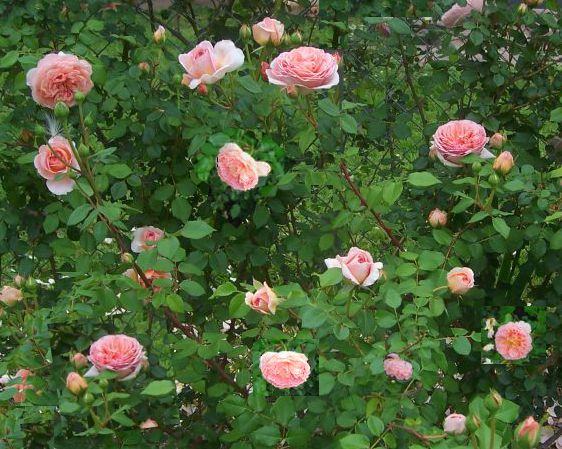
Growing David Austin’s ‘Abraham Darby’ Rose From: Hedgerow Roses JUNE 11, 2011
I have a superstar in my garden, and his name is ‘Abraham Darby’. Last summer this rose was only in it’s first season in our garden and I was amazed at how quickly it shot up while having more roses than I knew what to do with, all the way up until fall.
Named for Abraham Darby I, a man who played an important role in the Industrial Revolution, Austin introduced this rose in 1985 as a cross between the modern roses ‘Aloha’ and ‘Yellow Cushion’.
'Abraham Darby' is described as a "well-formed shrub" reaching height/width of 5 feet with good disease resistance and repeat bloom. The blossoms are large, (approximately 5″ across), and are full, double, cupped, and have a strong fruity-sweet scent. I’ve seen Abraham Darby being listed as hardy to zones 5-10 and 4-8. Our garden is safely in zone 6.
In our garden, ‘Abraham Darby’ lives up to expectations by truly being incredibly vigorous. While I’ve heard reports that this is a rose that succumbs to rust, I have not seen that, nor have I seen problems with black spot which typically runs rampant around here. EDIT: 5/12 Holy cats! A.D. got a serious case of B.S. this spring and was almost completely defoliated. It’s recovering nicely, though, with lots of new growth and buds. Something to keep in mind, though, that this rose is not completely resistant. Additionally, I’ve found that it does not care for extreme hot, humid temperatures. (Who does?) We had a streak of days recently where temps climbed into the mid 90′s with high humidity and my blooms balled up and needed to be removed.
‘Abraham Darby’ has very dense, thick growth. I sometimes have to get in there and prune away some of the canes in the center of the plant to give it more air circulation. The leaves are bright green and glossy; even when not in bloom, this is an attractive plant. It recovers quickly from pruning and with dead-heading will continue to bloom all season.
My only complaint about ‘Abraham Darby’ was actually rectified this spring when I did some rearranging in our garden. You see, the roses are so large and heavy that they droop on the plant, and with the addition of it’s also somewhat arching canes, it’s former placement in the garden at ground level meant that the roses couldn’t be fully enjoyed. I transplanted our ‘Abraham Darby’ into a very large pot (15+ gallons) in early spring so now the roses are at eye-level, and the canes can flow for a pleasing, billowing appearance. If you choose to grow this rose yourself, I highly recommend training it to a pillar or placing it in a container as I did. You will get much more enjoyment out of it!
‘Abraham Darby’ blooms on new wood, so pruning early will encourage new growth and lots of flowering. Roses are heavy feeders, so I give ours plenty of organic material to grow in and feed them regularly during the growing season. I’ve found that with our Austin roses, pruning back after the initial first flowering will encourage repeat bloom all the way up until autumn. I leave the last of the autumn blooms on the plants, though, so our roses can safely go into dormancy for winter.
As our new garden takes shape, I find that I am increasing individual varieties of roses, but not multiple quantities of each, as I have limited space and too many that I want to try growing. However, I am making an exception with ‘Abraham Darby’ and hope to be adding another next spring, simply because I love it so much. EDIT: I went a little overboard with new additions this spring, so we’re just going to stick with the one Darby. I can’t wait for it to bloom! ------------------------------------------------------------------------------------------------------------------------------------------------------------- Posted By: Kidist P. Asrat
Freya Madeline Stark travelled in the Edwardian era and later, not the Victorian. There is a lot of difference between the Victorian world and the Edwardian world, especially regarding women and attitudes towards their autonomy.
Kidist: April 8
You miss my point on the Edwardian lady travelers vs. the Victorian Lady traveler. I don't see that much difference between the two (see below).
You seem to think "autonomy" is the greatest thing that happened to women. As visceral male reaction shows us, women can get raped for this "autonomy."
Women knew this. They knew that men could protect them, but they could "rape" and destroy them too. Now we have lost that instinct.
But I don't think your point stands. Women doing anything adventurous on their own would have been frowned upon in both societies, and even physically stopped.
And Stark took all kinds of "feminine" precautions, such as getting male leaders on her side through monetary and humanitarian means (she nursed THEIR wounded men!).
Lara Logan would never do this. She strutted along using her sexuality. The result was she got raped.
I have changed the title to the post from Bold Victorian Lady Traveler to Bold Edwardian Lady Traveler.
I am gratified that you chose Gregory Peck and Peter Falk as examples of intelligent men. Did you know that Peck was a lifelong Democrat and very politically active in Democratic and humanitarian causes, not unlike George Clooney ad Brad Pitt? Did you know that he was vocal enough on behalf of those causes that he made Richard Nixon's enemies list? Falk supported Democratic candidates, including Bill Clinton, in elections and gave money to NOW. Peck married working women.
As to Ginger Rogers and being led by Fred Astaire, she used to say that what she did was harder than what he did ... she had to do it backwards, and in heels.
Kidist: April 8
What we have are idiot democrats (i.e. liberals) in our current era hardly compares with the traditional democrats. And yes, Richard Nixon, that paragon of honesty and excellence himself!
------------------------------------------------------------------------------------------------------------------------------------------------------------- Posted By: Kidist P. Asrat
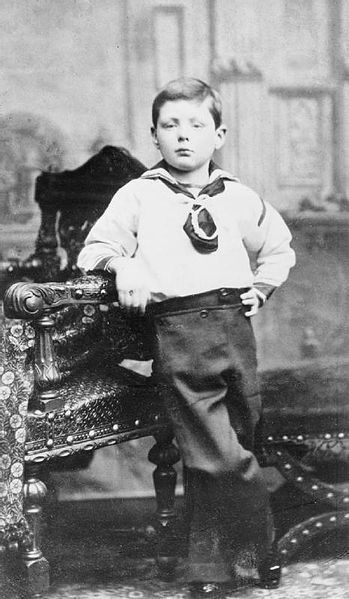
Churchill, aged 7 In Dublin, Ireland Ministry of Information WWII Misc. Collection Cat. No. ZZZ 7555D
On April 5th, PBS showed a documentary on Churchill titled "Great Romances of the 20th Century: Clementine & Winston Churchill." I cannot find any video (even promotional video) on it, but this is how the program describes the documentary:
The story of an enduring love match between two intelligent and forceful personalities. Clementine gave great strength to Britain's great war leader and helped him to weather the storms of his changeable political career.
There is a lot we already know about Churchill, including his persistence in fighting Hitler, which the documentary outlined. But I didn't know that he introduced the term "The Iron Curtain" to the world. He did so in a speech in 1946 at Westminster College, in Fulton, Missouri where he came to receive an honorary degree. Here is part of his speech:
From Stettin in the Baltic to Trieste in the Adriatic an iron curtain has descended across the Continent. Behind that line lie all the capitals of the ancient states of Central and Eastern Europe. Warsaw, Berlin, Prague, Vienna, Budapest, Belgrade, Bucharest and Sofia, all these famous cities and the populations around them lie in what I must call the Soviet sphere, and all are subject in one form or another, not only to Soviet influence but to a very high and, in some cases, increasing measure of control from Moscow. Athens alone -- Greece with its immortal glories -- is free to decide its future at an election under British, American and French observation. The Russian-dominated Polish Government has been encouraged to make enormous and wrongful inroads upon Germany, and mass expulsions of millions of Germans on a scale grievous and undreamed-of are now taking place. The Communist parties, which were very small in all these Eastern States of Europe, have been raised to pre-eminence and power far beyond their numbers and are seeking everywhere to obtain totalitarian control. Police governments are prevailing in nearly every case, and so far, except in Czechoslovakia, there is no true democracy.
A good part of the video showed Churchill's home, the beautiful Chartwell House. It was his paradisaical sanctuary, where he could work out his thoughts and ideas. "A day away from Chartwell is a day wasted," he said.
Winston Churchill Arthur Pan (1894–1983) Date Painted: 1943 Oil on canvas 40" x 50"
Chartwell grounds
A View of Chartwell Winston Churchill Date painted: c. 1938 Oil on canvas 23 3/4 x 36 in Collection: National Trust
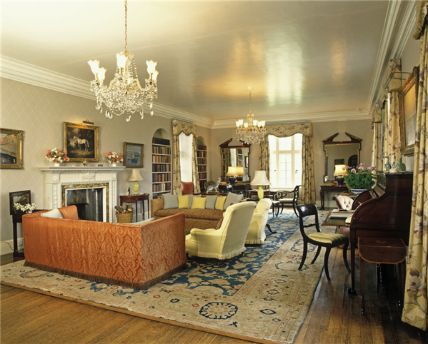
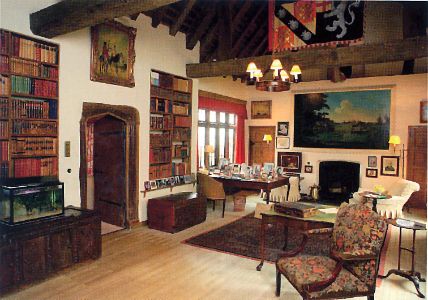
The Drawing room
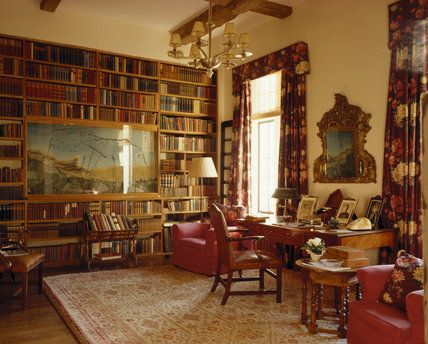
The Library
The Study
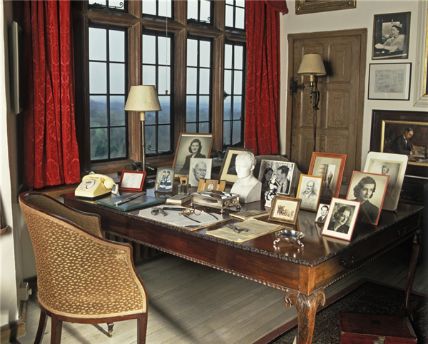
Churchill's desk in his study
Close-up of Churchill's desk in the study, with busts of Napoleon, and family photographs
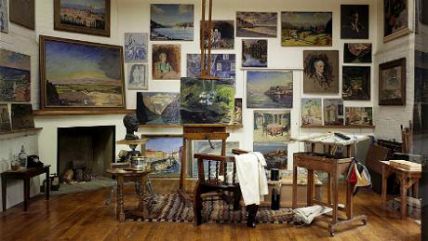
The Studio, with oil and watercolor paintings by Churchill
Churchill painting
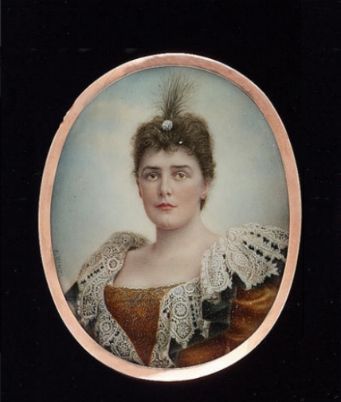
Lady Randolph Churchill (1854-1921) (Churchill's mother) Ernest Rinzi (British, 1836-1909) Oval Miniature 81 in. high
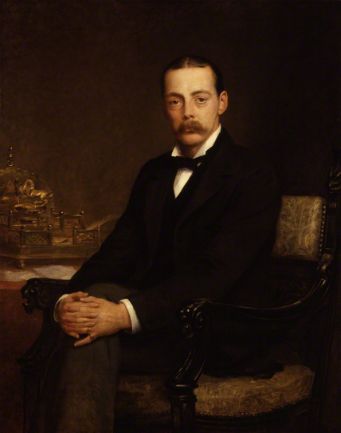
Lord Randolph Churchill (1849-1895) (Churchill's father) Edwin Longsden Long (1829-1891) Oil on canvas Exhibited 1888 50 1/8 in. x 40 in.
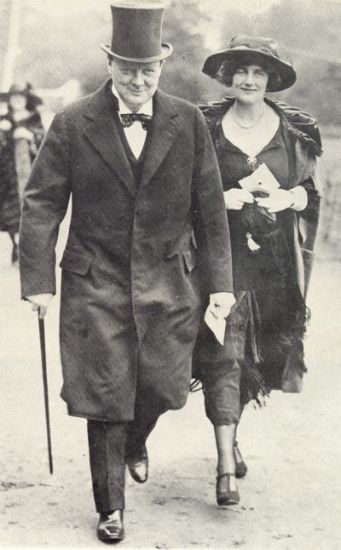
Winston Churchill and his wife Clementine (who resembles his mother)
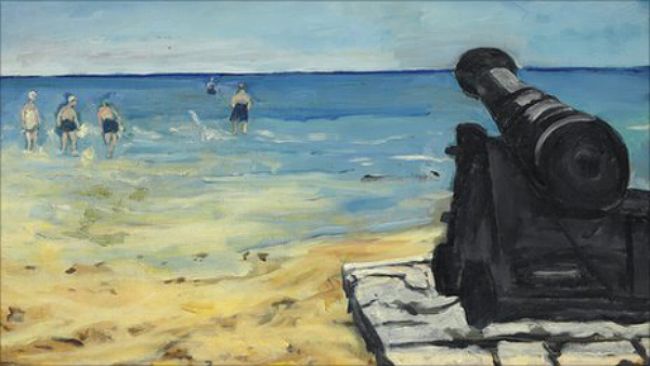
The Beach at Walmer Sir Winston Churchill (1874-1965) Oil on canvas 25 x 30 in. Date painted: c. 1938
------------------------------------------------------------------------------------------------------------------------------------------------------------- Posted By: Kidist P. Asrat
I have put a lilac rose as a prominent logo for this site. I like the color lilac, and that was the initial incentive to use that color (one has to start somewhere). As I looked around for the symbolic meanings of the color, here are some that I found:
Lilac roses stand for grace, gentility, elegance and refinement. It is the rose of sweet thoughts, adds enchantment and indicates majesty.
So, along with humility (gentility), the color has grandeur (majesty and refinement), and a certain magic (enchantment).
This is what I thought when I started the site: to make it an ambitious site. We'll see what happens!
But, as I write about beauty, and as I research about beauty, it is certainly true that every single aspect of our lives can be (and ideally, should be) touched by beauty: from doing simple house-hold chores to praising God.
Now the rose. Much of the rose's symbolism is intertwined with its color. But, one site compiled descriptions from other sources and described the rose's symbolism without resorting too much to its colors:
[The rose] is at once a symbol of purity and a symbol of passion; heavenly perfection and earthly passion; virginity and fertility; death and life. The rose is the flower of the goddess Venus but also the blood of Adonis and of Christ. It is a symbol of transmutation - that of taking food from the earth and transmuting it into the beautiful fragrant rose. The rose garden is a symbol of Paradise. It is the place of the mystic marriage. In ancient Rome, roses were grown in the funerary gardens to symbolize resurrection. The thorns have represented suffering and sacrifice as well as the sins of the Fall from Paradise.
The rose has also been used as a sign of silence and secrecy. The word sub rosa "under the rose" referring to the demand for discretion whenever a rose was hung from the ceiling at a meeting. In the Mysteries roses were sacred to Isis. It is also the flower of her son Harpocrates or younger Horus, the god of silence.
In Christian art, the white rose is a symbol of purity, the gold or yellow rose a symbol of impossible perfection and papal benediction, and the red rose a symbol for martyrdom. The rose is a frequent symbol for the Virgin Mary, who is called a "rose without thorns" since she was free of original sin. This may refer to St. Ambrose's legend that the rose grew, without thorns, in the Garden of Eden. After the Fall, it became an earthly plant, and the thorns appeared as a reminder of man's sins and fall from grace. The scent and beauty remained as a poignant reminder of the lost perfection of Paradise.
The five petals of the wild rose are equated with the five joys of Mary and the five letters in her name Maria. The Christmas rose, a hardy white flower with five petals that blooms at Christmas when the rest of the garden is dormant, is a symbol of the Nativity and the coming of the Messiah. The Rose of Jericho, or Rose of the Virgin, also known as the Resurrection plant, is supposed to have sprung up wherever the Holy Family stopped during the Flight into Egypt. It is said to have blossomed at the Nativity, closed at the Crucifixion, and reopened at Easter.
On the rosary, the Joyful Mysteries, those relating to the happy events in Mary's life, were white roses; those relating to her suffering, the Sorrowful Mysteries, were red; and the Glorious Mysteries, the triumphant events, were symbolized by the yellow or golden rose. The rosary can be considered a symbolic wreath of red, white, and yellow roses.
Wreaths of roses crowning angels, saints, or the redeemed in Heaven are symbolic of their heavenly joy.
Of course, there is the symbolism of flowers in general:
Shakespeare tells as that "fairies use flowers for their charactery," and so, he might have added, do mortals, for the language of flowers is almost as ancient and universal a one as that of speech.
As I find more meanings, I will add them to the list.
------------------------------------------------------------------------------------------------------------------------------------------------------------- Posted By: Kidist P. Asrat
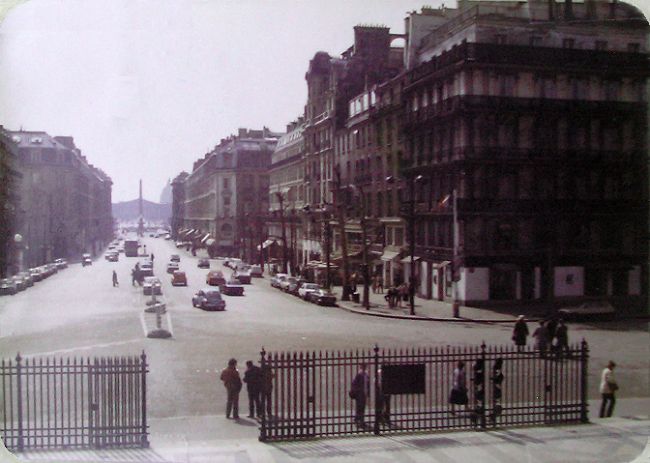
I took this photograph in Paris with one of those instamatic Kodak cameras. That was before I got fancier cameras, and studied photography.
It is tinted sepia because of the years, and because those Kodak films were not really of very high quality. But the rounded corners of the picture give it a better look than the hard edged prints we get today from the photo developers.
I'm standing in front of the Église de la Madeleine. The huge columns of the church are difficult to take, and actually not very interesting. I have many photos of the columns from various angles, but I don't like any of them.
I took this image because of the distant obelisk of the Place de la Concorde and the dome of the Hôtel des Invalides. The triangular Palais Bourbon lies in between. And the grand French Beaux Arts buidings are on either side. The French flag is flying on a pole at the corner of Rue Royale. I somehow processed all this in the brief amount of time I stood there (probably five to ten minutes).
I took the railings in front of the church to indicate that I was taking the image from the church.
I think the people and cars add character to the image (although I couldn't control them, and I probably wished they were not around). A couple of daring men are trying to cross the street (the avenue), and tiny cars are milling about (there's a deux chevaux citroen in red, which I think is now extinct), and they don't look like they're traveling very fast.
I suppose this view has been seen by many, and taken by tourists as well as professionals. And mine is just a drop in the bucket.
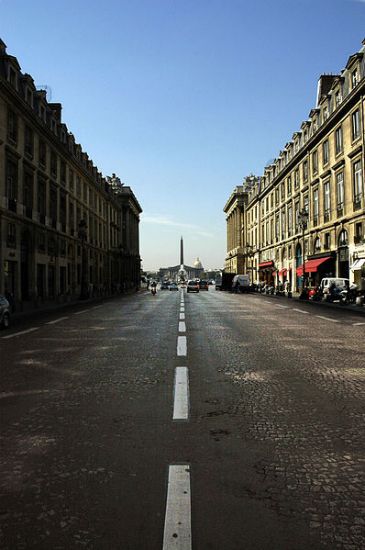
Below is a Wikipedia reproduction of the same spot, at a slightly different angle - it is more "head on" and I think more boring. I thought (and I think correctly) that taking the photo at an angle slightly away from the distant focal point would make it more interesting. I also probably wanted a more complete shot of the nearby building including its front and its side, rather than just a long shot of its side.
Mid-way down the Rue Royale, at 10:51 on the 10th of August 2000 Photo: J.M. Schomburg
The above photograph looks like it was taken in the early morning, hence the lack of pedestrians, and the very few cars. Although I think the photographer waited around to have the street as empty as possible. And he probably thought it was clever to have the white lines lead straight up to the background monuments. I think it just constrains and narrows the Rue Royale, making it less grand.
There is a grander Boulevard de la Madeleine, but it is to the side of the church, and joins with Boulevard Capucines, which then reaches L'Opéra de Paris. I think it is apt that the Rue Royale is the street right in front of the church, giving the church a regal (royal) air.
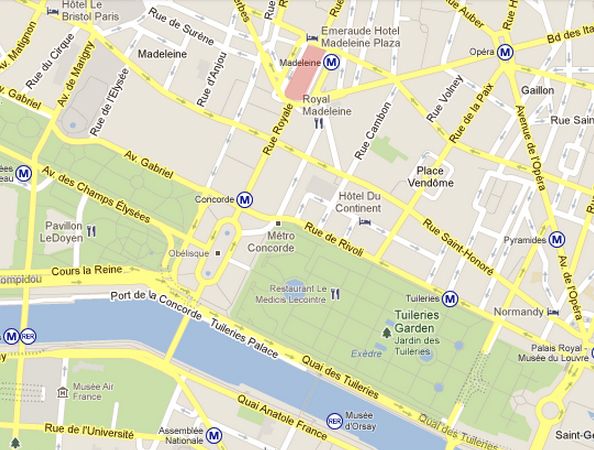
Streets Around L'Église de la Madeleine
A larger area showing the Place de l'Opéra, the Place de la Concorde, the Assemblée Nationale, the Musée du Louvre, the Jardin des Tuileries, Avenue des Champs-Élysées, and the Seine, in relation to L'Église de la Madeleine.
The Madeleine is a parish of the Archdiocese of Paris. Masses and other religious services are celebrated daily...
The site of this edifice, centred at the end of rue Royale, a line-of-sight between Gabriel's twin hôtels in the Place de la Concorde, required a suitably monumental end from the time the square was established in 1755, as Place Louis XV. The settlement round the site was called Ville l'Évêque, for it had belonged to the bishop of Paris since the time of Philip II of France, when Bishop Maurice de Sully seized the synagogue that stood on the site from the Jews of Paris in 1182, and consecrated it a church dedicated to Mary Magdalene. The site in the suburban faubourg had been annexed to the city of Paris since 1722. [More here]
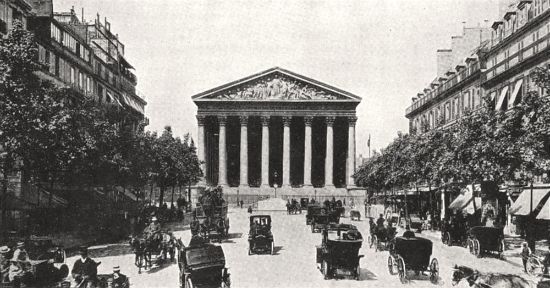
Below is a turn-of-the-twentieth-century photograph from the Library of Congress George Grantham Bain Collection of almost the same scene I took, with almost the same activities (people, vehicles, etc.). The photographer also took it at a slight angle (but went a farther away from the church) so the distant images are not dead-center, and the side and front of the building in the middle are visible. It looks like an early twentieth century photograph.
Paris, France, Looking down Rue Royal Black and White film copy negative United States Library of Congress The George Grantham Bain Collection
The George Grantham Bain Collection represents the photographic files of one of America's earliest news picture agencies. The collection richly documents sports events, theater, celebrities, crime, strikes, disasters, political activities including the woman suffrage campaign, conventions and public celebrations. The photographs Bain produced and gathered for distribution through his news service were worldwide in their coverage, but there was a special emphasis on life in New York City. The bulk of the collection dates from the 1900s to the mid-1920s, but scattered images can be found as early as the 1860s and as late as the 1930s. Photo France - Paris - Looking down Rue Royale 1900. Reprint is 20 in. x 16 in. on archival quality photo paper.
Facing the Église de la Madeleine, on Rue Royale:
La Rue Royale et la Madeleine Antique print, 1900 Antique photographic book illustration, 1900 "La France Géographie Illustree" Published by Librairie Larousse, Paris ------------------------------------------------------------------------------------------------------------------------------------------------------------- Posted By: Kidist P. Asrat
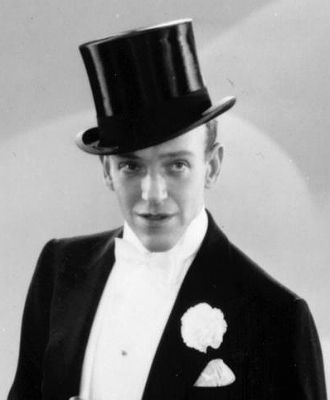
I watched Fred Astaire's 1935 screwball comedy Top Hat the other night. He is of course a phenomenal dancer, but he's also a very good actor. He has an intelligence about him, which would come out even if he were give a dumb role.
And Gregory Peck was in the 1958 western The Big Country. There were scenes when he would silently watch something unravel, or someone make some statement, or the woman he plans to propose to, and what we see is keen intelligence in the dark, pensive gaze. He takes courting the women, Julie Maragon, as seriously as he a does taming a wild horse, and approaches her with as much energy (although it is camouflaged with good manners and affection) to tame her as he does the horse.
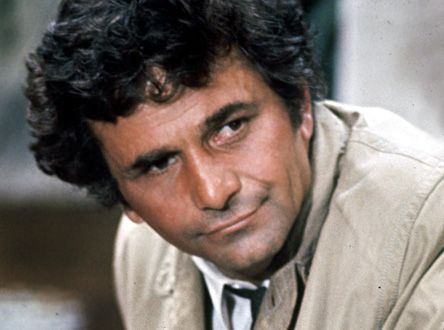
Columbo, Peter Falk's character, has a penetrating intelligence which is fun to watch, especially as I try to decipher what it is that he saw that would help him solve the case. But, in true post-60s fashion (the series was filmed in the 1970s), his signature look is not a top hat, or rancher's boots, but a crumpled, worn out top coat. His hair is as disheveled as his clothing. But he somehow manages to retain his intelligent look.
Everybody takes these men seriously, even Peter Falk, after his first penetratingly simple question. And the women respond to this intelligence by letting the men lead them. Ginger Rogers lets Astaire pirouette her around the dance floor. And the woman Peck woos is tamed from her rancher's life to the life of a rancher's wife. Falk's wife is never shown on screen, although she nags him via telephone calls at his work (often the house of a murder scene) to get bread or milk on his way home, which Falk deflates from escalating by talking to her kindly and patiently. But he goes about his professional duties without his wife's meddling, and I doubt he would have any patience with her if she were to meddle.
In a few more years we would be in the territory of the Brad Pitts and the George Clooneys. Pitt would get his snake woman Jolie to call all the shots, and Clooney would bubble along in a jovial manner, thinking he's in charge. And they both look like idiots on the screen.
The woods of Arcady are dead, And over is their antique joy; Of old the world on dreaming fed; Gray Truth is now her painted toy; Yet still she turns her restless head: But O, sick children of the world, Of all the many changing things In dreary dancing past us whirled, To the cracked tune that Chronos sings, Words alone are certain good. Where are now the warring kings, Word be-mockers?—By the Rood Where are now the warring kings? An idle word is now their glory, By the stammering schoolboy said, Reading some entangled story: The kings of the old time are fled The wandering earth herself may be Only a sudden flaming word, In clanging space a moment heard, Troubling the endless reverie.
Then nowise worship dusty deeds, Nor seek; for this is also sooth; To hunger fiercely after truth, Lest all thy toiling only breeds New dreams, new dreams; there is no truth Saving in thine own heart. Seek, then, No learning from the starry men, Who follow with the optic glass The whirling ways of stars that pass— Seek, then, for this is also sooth, No word of theirs—the cold star-bane Has cloven and rent their hearts in twain, And dead is all their human truth.
Go gather by the humming-sea Some twisted, echo-harbouring shell, And to its lips thy story tell, And they thy comforters will be, Rewarding in melodious guile, Thy fretful words a little while, Till they shall singing fade in ruth, And die a pearly brotherhood; For words alone are certain good: Sing, then, for this is also sooth.
I must be gone: there is a grave Where daffodil and lily wave, And I would please the hapless faun, Buried under the sleepy ground, With mirthful songs before the dawn. His shouting days with mirth were crowned; And still I dream he treads the lawn, Walking ghostly in the dew, Pierced by my glad singing through, My songs of old earth’s dreamy youth: But ah! she dreams not now; dream thou! For fair are poppies on the brow: Dream, dream, for this is also sooth.
Laura Wood has an eloquent post on the funeral service of Lawrence Auster.
In Lawrence Auster, Requiescat in Pace she writes:
Mr. Auster’s body was taken in a procession to Saints Peter and Paul Cemetery in Springfield, Pennsylvania, about 15 miles from the church, where it was lowered into a grave in an open lawn next to an oak tree. In the spring sun, the scene evoked “The Song of the Happy Shepherd” by W.B. Yeats, one of the many poems by the Irish poet that Mr. Auster cherished and knew by heart:
I must be gone: there is a grave Where daffodil and lily wave, And I would please the hapless faun, Buried under the sleepy ground, With mirthful songs before the dawn.
A couple of days ago, when I wrote my "in memoriam" for Larry, I debated posting a photograph of daffodils which I had taken several springs ago.
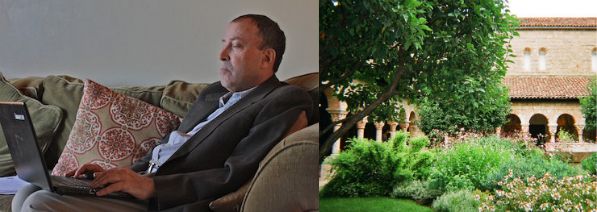
And in my image for the post, I have juxtaposed a photograph of a tree with one of Larry leaning back as though resting on the trunk of the tree, with the paradisaical gardens of the Cloisters within his arm's reach.
How apt that the field around the church has daffodils, and that there is an oak tree for rest and repose.
------------------------------------------------------------------------------------------------------------------------------------------------------------- Posted By: Kidist P. Asrat
Left: Photograph of Brahms from the 1890's Right: Photograph of Brahms from around 1853
It is difficult compiling Brahms' works. His piano solo waltzes were transcribed for voice, orchestra, chamber orchestras and quartets. He also wrote his waltzes for two pianos (four hands), which gives them the big, dramatic sound, very different from the the more delicate sounds of the piano pieces. Perhaps that was his genius, that his music could traverse genres so easily, which I think also made him more accessible.
His 16 Waltzes from Op.39 have been transcribed for orchestral, quartet and voice pieces.
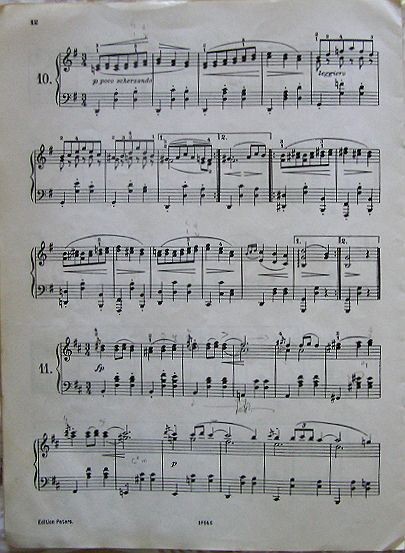
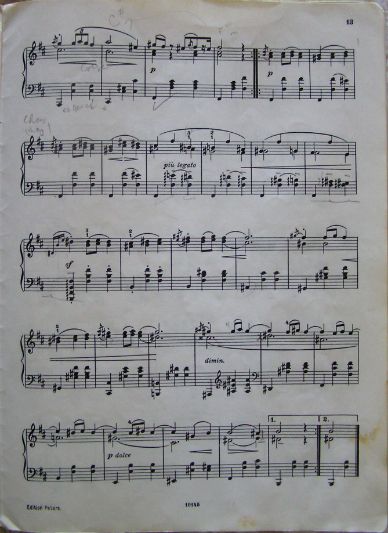
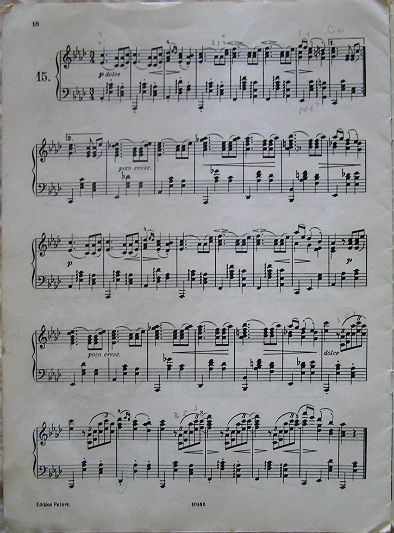
I used to play (still play? that requires a piano, which I don't have, and slogging through my music books to get nimble fingers once again) some of Brahms' waltzes for piano. The Waltz in A Flat Major (No. 15) is one of the easier ones in the collection Brahms Waltzes (for piano solo), but it has difficult octaves. The Waltz in B Minor (No. 11) is harder. But before that comes the short but fast and furious Waltz in G Major (No. 10). (The waltzes can be listened to at this Wikipedia site: Sixteen Waltzes, Op. 39 - Brahms.) My hands are too small to play the octaves in No. 15 effectively, much less the octaves with chords! I compromise and play the octaves without the chords. Playing octaves fast is actually easier since I just have to skim across the notes without putting too much pressure on the keys. The volume can be increased with a loud and dramatic base with the left hand.
Below are pages from my music book: Brahms Waltzes Opus 39. Piano Solo (Emil Sauer) Edition Peters
The light pencil marks in my old piano book (which I kept as clean as possible, and protected as much as possible by covering it with a plastic cover) are still visible. Such reminders help during a difficult passage, or when the placement of fingers need to be changed (e.g. using the thumb instead of the index finger), to make for a smoother performance.
I've played at least two of the waltzes from this collection in public recitals.
Johanne Brahms Waltz in G Major Op 39 No. 10
Waltz in B Minor Op 39 No. 11 Page 1
Johanne Brahms Waltz in B Minor Op 39 No. 11 Page 2
Johanne Brahms Waltz in A Flat Major Op 39 No. 15
I wrote about my visit to the Morgan Library in New York, this past December, where I posted copies of Brahms' transcripts on display in the library.
I have hand written notes on Brahms' music manuscripts. I was surprised by his messy style, and wrote down in my notes "drama - also in manuscript" comparing his melodramatic music with his writing style.
But Brahms' music is less chaotic than his writing style. That is what art is, after all, to contain energy so that it comes out ordered and structured, rather than chaotic and loose.
Below is one Brahms manuscript from the Morgan:
Brahms, Johannes, 1833-1897 Score, p. [3] (3 of 4) Lieder und Gesänge, op. 59 Dämmrung senkte sich von oben Autograph manuscript, 1871? Morgan Library
Larry Auster got into a lot of (blog) arguments when he put up photos of well-known personalities, and commented on their appearance. These observations ranged from discussions on physical alterations like plastic surgery, to sartorial decisions. One of his favorite (if that's the right term to use) personalities was Michelle Obama. He couldn't believe that the First Lady of the United States could tarnish the image of the presidency as much as she did, through her inelegant and crass appearances. He believed that one's appearance was a reflection on one's personality.
I think he believed that conservatives presented themselves better than liberals. But in our liberal-leaning world, he also realized that many self-proclaimed conservatives are actually more liberal than conservative.
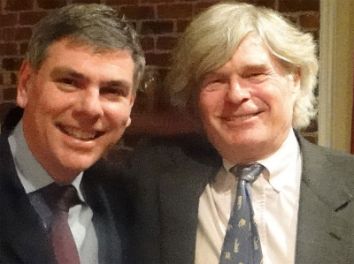
Well, here I compare the appearance of two conservatives, one true and one false: Larry Auster and Peter Brimelow.
Left: Larry Auster, from a photo taken in 2013 Right: Peter Brimelow, from a photo taken around 2011
True to his precise and careful nature, Larry comes across as the conservative in this photo (which is cropped from a larger one taken by Dean Ericson). He is ill, but he came out of his home in a smart and well-patterned checkered tie, which matches his long chocolate-brown coat, and a cream (not white) shirt. His hair, which had gone through various ravages of cancer treatment, is thin, but short and combed.
His slightly upturned mouth, with a shadow of a smile, shows that he is a little amused, perhaps by all the attention from the photo shoot. But his eyes are calm and observant, and kind. He takes Dean's effort seriously, and came out dressed and ready for the occasion.
Look at Brimelow. He's about the same age as Larry (according to Wikipedia, older by about two years, so the photos above show them at about the same age), and his health seems fine. Yet his face is red and bloated, and his eyes are barely open in the fleshy face. It looks as though he's gained weight. His hair is disheveled and long, and needs grooming as well as a cut. His tie is a dull gray, which matches the lusterless gray of is suit.
His photo was posted on Belgian politician Filip DeWinter's website. DeWinter is fifty (only fifteen years younger than Brimelow, but still middle-aged), and the contrast between the two is great, with a vibrant and clear-eyed DeWinter standing alongside the puffy Brimelow.
This is Brimelow's toddler daughter from his second marriage. His second wife, Lydia Brimelow, is thirty-seven years younger than him. They have another daughter who was born in 2012. He has two older children in their late teens from a first marriage. Their mother died in 2004.
I wrote in 2012 about Brimelow, his young wife and their new born daughter:
Brimelow is close to seventy, which will make him an nonagenarian at his new daughter's college graduation, if he makes it that long. What kind of life has he subjected her to, with a senior citizen father, with his death imminent?
Such is the way of selfish, narcissistic men that "lead" the world these days. Of course, Brimelow is not a conservative, although that is what he uses to increase his website's readership. He is a libertarian.
I wrote about his second wife:
Sullivan has a hard glint in eyes like someone that goes after what she wants, and gets it. Such character doesn't discriminate by age.
Of course, our choices are determined by many factors, including the behavior of those around us. But, Brimelow could have tempered his behavior for the good, rather than for his gratification.
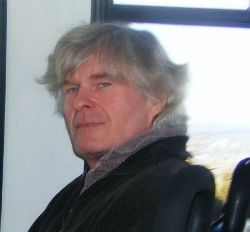
I think the consequences of his decision are what is showing in the photo below, which he posted at his public website Vdare. He is unshaven, with a tired smile. Toddlers require a lot of energy. His eyes also show ambivalence. Was this such a good idea after all?
I analyzed another photo of his, which he posted in December 2010 about three years after he married his second wife.
I believe that people demonstrate their inner conflicts and troubles in their expressions. Trying to cover them up only results in conflicted manifestations. Also, I believe that people with inner conflicts have a hard time deciphering their (and others') expressions. What looks strong may be weak, what looks attractive is subtly devious.
I don't mean to malign people, but Brimelow is a leaders of some kind who is asking us, mere plebs, to be his followers of sort. Brimelow wants us to read his online magazine Vdare. I recently wrote about his marriage to a woman almost forty years his junior, whom he met...through his online magazine! And now they have an infant daughter together. A sixty-something-year-old man with a twenty-something-year-old wife, and a new baby. Old enough to be the grandfather of his daughter is one unpleasant factor. But I wonder how this young girl will grow up, with an aging father who by the time she is ready to get married - the norm being in her twenties, like her mother is now - will be a real senior citizen who should be getting ready for his last rites?
------------------------------------------------------------------------------------------------------------------------------------------------------------- Posted By: Kidist P. Asrat
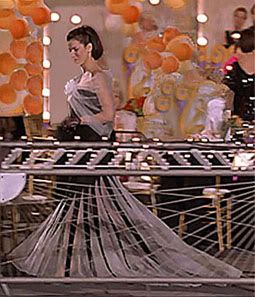
Sandra Bullock in a dress designed by costume designer Gary Jones at a Charity Ball on her boss's - Hugh Grant's - yacht
I've watched Sandra Bullock's Two Weeks Notice a few times, mostly because I like her, and I think she's a good actress (although contemporary actresses basically play variations of themselves, and do not venture into real role playing), and also for the scenes of New York City. Hugh Grant, is the upper-class Englishman in a high profile job (a law firm head) in NYC - a role which actually fits him better than it sounds.
Here's a lovely dress that Sandra Bullock wore to a charity ball on Grant's yacht (yes, poor children are better remembered while wining and dining in expensive and beautiful surroundings). The dress was designed by Gary Jones.
In creating Lucy’s wardrobe for the gala sequence, costume designer Gary Jones designed a striking black and white gown inspired by vintage Yves St. Laurent and Valentino. "We wanted a classic look that meshed with Lucy’s professional style: feminine but fitted," says Jones, who took further inspiration from films of the 1930s and 40s, as well as the cinematic style of Audrey Hepburn and Katherine Hepburn.
And the dress does live up to its mentors. As does Sandra Bullock.
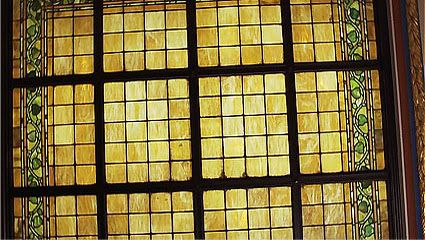
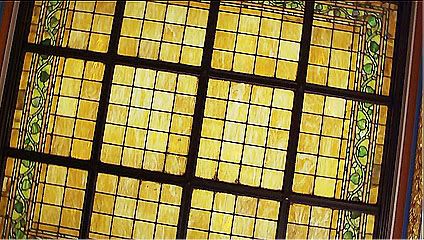
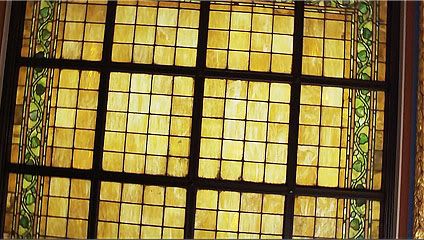
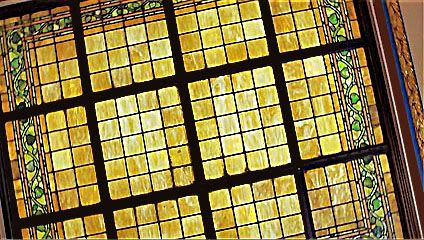
Silly movies sometimes give us unexpected views of beautiful things. Below are screen shots of a stained glass ceiling from the movie Two Weeks Notice (which nonetheless is a pleasant movie to watch because of talents of comic Sandra Bullock and the Englishman in America Hugh Grant). I describe my quest to find the actual location of this ceiling below the images. If anyone has any information, please let me know.
Above are screen shots of a building in New York, where Sandra Bullock's character from Two Weeks Notice goes to have an interview after quitting the demanding job of assistant-to-the-lawyer/secretary/wife-in role-only/nanny to Hugh Grant's character.
The building has a beautiful stained-glass ceiling, which the camera briefly twirls around as it follows Bullock and the lawyer who interviewed her come down the staircase. On the wall behind the banister are three imposing portraits of what look like Lowell, Hanes and Richards, names which are inscribed on tasteful steel in very large lettering below the portraits. These stern gentlemen quite likely run the firm, or are its founders, or are involved with some important contribution.
The whole film was shot in New York, at the urging of Bullock:
Shortly after the events of September 11th, Sandra Bullock, also the film's producer, urged that the film be shot entirely in New York to marshal support for the City and its production industry. No online "film location" website could give me any information on the building.
I've tried looking online for the building with these stained-glass ceilings, but I've had no luck so far. The film credits don't mention them, and other sources lead me to Grant's law firm building (Lucent Technologies building), and the Sky Studio in Greenwich Village which serves as the hotel in which Grant lives ("I own the hotel, and I live there. My life is very much like Monopoly." - I thought this was another funny line in the frequently funny movie, since surely jail must be one of the possibilities of his life of monopoly), but not to this particular building.
I bought the DVD (yes, that's how much I liked it, plus it was on sale), and have made screen shots of the stained-glass ceiling, which I've posted below.
The film is worth renting/buying. It has some good shots of New York, and Bullock and Grant are witty personalities, who are both very good actors. And as I've mentioned before, there are also some unexpectedly lovely scenes.
----------------------------------------------------------------------------------------------------------------------------------------------------------- Posted By: Kidist P. Asrat
Although Larry Auster didn't directly write about beauty, his work is infused with the desire to bring beauty back into our world.
One of the most memorable posts he did on art and beauty was his reaction to a bust of George Washington. The image of the bust he has posted is huge and takes up the whole computer screen, so that we, like him, can have as close a look at it as possible. This reverence he had for America continued throughout his writings. His strict and relentless critique of America, both cultural and political, was a demonstration of his love for his country, how he hadn't given up on her, and how he aimed to fight to restore her beauty and glory against all odds. That was his bravery. And that was his insight.
I sent Larry this piece of music to ease his pain and suffering after his cancer resumed, and resolved to stay. I hope it brought him some relief during his difficult last days.
The first time I met Larry was in 2009, when I went to New York to participate in an event for the Danish Cartoonist Kurt Westergaard. I went with a group from Canada called the International Free Press Society. Larry knew about my trip to New York, and he and I met separately. He gave me a spot to meet in the middle of Manhattan, a small diner called The Red Flame. He had never met me before, but I had my blog up with my photo for a couple of years by then. He politely came up to me and asked "Are you Kidist?" rather than make a rude assumption. He ordered a hamburger, which I found out is a favorite of his, while I had a chicken salad. He was impressed with my dietary choice, and it was one of the best chicken salads I've had.
After lunch, we walked for many blocks up Fifth Avenue, with Larry pointing out various New York landmarks and spots. He was especially keen to show me Rockefeller Center, which clearly still surprised him even though he was a long-time resident of New York. The Christmas tree and decorations were up, and skaters were pirouetting beneath us.
We kept walking down Fifth Avenue and at some point we found a beautiful courtyard interior. I cannot find the name of this place, but New York is filled with such unique surprises. We got some refreshments, to take a break and to enjoy this interior. I ordered a diet coke, and Larry talked about ordering a whisky. But he was too polite to do so, and we sat drinking diet cokes together.
We met again almost two years later, in 2011. Larry planned a VFR Christmas dinner for his readers and friends. The group met at an Irish pub/restaurant in mid-town Manhattan called Kennedy's. I was honored to have been included in this list, and made every effort to attend. I was able to attend, and at the same time spend a few days in New York.
This time, our cultural visit was to the Metropolitan Museum. Laura Wood, from The Thinking Housewife also came. The attraction was the annual Christmas Tree with a Neapolitan Baroque Crèche. We looked at the figurines with amazement. How could such small sculptures be crafted so perfectly? We looked for Baby Jesus, and found his tiny, perfect form. After the visit, which included rushing through various exhibits in the museum, we went down to have a snack in the restaurant/cafeteria. Larry said he liked coming there for a meal. I agreed that the food was of high quality. I suspect it was also the cultural environment that Larry liked, when he went just for a meal to the museum.
I traveled again to New York in August 2012. I stayed about a week. This time, I went to try and get some sponsorship for my book project. I also did my usual rounds of shopping and museum viewing. I telephoned Larry to say I was in New York (I had emailed him about my trip), and he suggested we meet at the lovely Straus Park, which is near his home, as well as near where I was staying. I had bought my (computer/portable) tablet then, and Larry, with his perennial curiosity, wanted to look up more about the Park, while we sat on the bench in front of the statue "Memory."
According to this site, on the background of the Park:
In 1912, the City named this park after the Strauses, who had lived in a frame house at 27-47 Broadway, near 105th Street. Public subscriptions of $20,000 were raised to commission this monument. The work consists of a granite curved exedra, a central bronze reclining female figure of Memory (for which the celebrated model Audrey Munson posed), and a reflecting pool. The monument was dedicated three years to the day after the Titanic sank.
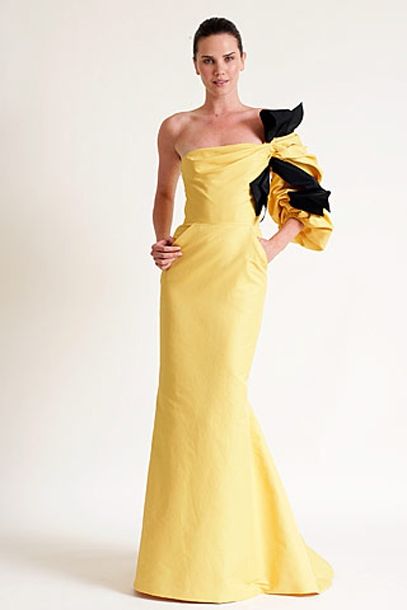
We nonetheless had cheerful things to talk about. I told Larry I went to Macy's earlier in the morning, and he asked me what I'd bought. It was a pink polka dot blouse which, I proudly told him, I'd gotten for half price on sale. Larry was in tune with clothing and fashion, and would notice small things like hats, bracelets and the patterns and colors of dresses, which he wasn't shy about commenting. I showed him a catalog of Carolina Herrera's evening gowns whose flagship store in mid-town Manhattan I'd also visited. He had some very clear preferences, and didn't like the low cut, "one-sleeve" evening gowns, and said it spoilt otherwise beautiful dresses. I agreed with him, that all this skin exposure was diminishing the beauty of the dresses, and the beauty of women.
My museum trip this time around was to the Cloisters. I had read about them in my tourist guide, and in an article a while back in some magazine, and was intrigued by them. I've written about them here. Larry was not so well by then, and I told him the trip is long. We'd have to take an uptown bus all the way to Washington Heights, then change buses to take us to the Cloisters. Once there, we would have to do a shortish walk on cobbled stones to get to the museum. He was hesitant, and I made the decision. "Let's go," I said. "We can always take the bus back, or catch a cab, if it is too difficult." We made it. It was a lovely trip. The Cloisters feel like a remote, hill-top castle. Even though they are technically in New York City, they feel like they're miles (geographically and culturally) away from the city. One lovely spot of repose is by the compound's walls, with a view of the Hudson River and the George Washington Bridge.
Larry lived off Riverside Drive, which has a beautiful path by the Hudson River. We walked along the drive to view the various luxury homes, with their elegant mouldings and brickwork, and to experience some of the natural paths that are part of New York. There was a cool breeze coming from the river, a welcome respite from the hot August sun.
Recently, in December, I was in New York once again, and once again I attended a Christmas dinner for friends and readers of VFR. We met again at Kennedy's. Larry was weaker this time, and I think the dinner tired him. But he was good company. I met with him a couple of times after the dinner. This time, our cultural visit was to the Morgan Library and Museum, which houses Pierpont Morgan's collections (later expanded by his son J. P. Morgan) of books, manuscripts, sculpture and paintings in mid-town Manhattan. It is an eclectic and interesting place. Once again, I had gone earlier, and suggested to Larry that this would be a good place to visit. There were seats all around the museum for resting, and it is not overwhelmingly big. Larry seemed to acquire energy from somewhere, because we stayed viewing the collections longer than I thought we would.
Larry always liked to experience things, staying a little longer at an especially beautiful spot, or walking down an interesting curve in a path, or spending time before a sculpture or a painting. New York is a haven for beauty in unexpected places. Even the subways and buses were places for this unexpected beauty. In order to take his mind off his ill-health, Larry would recite poetry he had memorized. During one subway ride, he recited poems by W. B. Yeats to me. He said reciting these poems (aloud or silently) refreshed him and helped him to absorb his attention and put him in a calm state. He posted many poems by Yeats at View From the Right. I read and studied these poems over the years, and grew to know and to somewhat understand them.
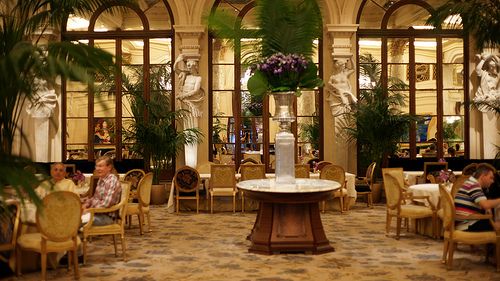
One of the most enchanting places we visited was the Plaza Hotel near Central Park. I had visited it earlier and again told Larry we should go there just for coffee (a meal would just be too expensive). We entered the lovely lobby and went into the Palm Court. It was late afternoon, and the staff was closing down (tea can only be served for so long, after all). Larry asked if we could just sit at the edge for a little while, and the staff obliged. We also dared to walk around to view the "marble caryatids representing the Four Seasons on the westwall." The wait staff patiently left us alone. Covering the Palm Court is a spectacular, restored art deco stained glass ceiling, which gave a regal and grand air to our brief stay.
We went downstairs to the "food court" for a quick snack. For some reason Hamentash, a Jewish delicacy traditionally eaten during Purim, was available. Larry suggested I try one with apricot filling. It was a dry, sweet pastry, and the apricot gave it a distinct and sophisticated taste. So we did get our tea (or coffee) at the Plaza after all.
Later that week, we had dinner at West 107 on Broadway, where I had one of the best pork chop meals. There was enough left over to take home. Rather than have dessert, Larry suggested that we go to his neighborhood restaurant, The Broadway Restaurant (which is really a diner), for hot chocolate. It was a real treat, with whipped cream piled on top of the rich chocolate drink.
My last visit with Larry was at a hamburger meal in a restaurant called Toast, where we went after our visit to the Morgan Library. "Cook it rare" he told the waiter. He educated me on the best way to eat this American tradition: "I don't know how people eat the dried up, over-cooked hamburgers that has become normal fare. The meat has to be moist, and to do that, you need very good meat, and you cannot over cook it." And it was the best hamburger I have eaten.
At Toast, Larry decided to have a glass of his beloved whisky. He was very particular about the kind he wanted. The brand he chose he said was lighter and more delicate. I ordered the house wine, to keep him company, and to enjoy a glass. It was a lovely fruity, light wine. Larry picked up my glass and said he just wanted to smell it. He did so with relish. This episode encouraged me to write (and research) about wine. Here is the article I posted which I titled The God of Wine.
I could tell that Larry loved New York; the old, original, artistic New York. His neighborhood gave him a lot of pleasure, and almost every corner was for discovering. I think he enjoyed my company, and was happy to show me his New York. And he was protective. If we went too long without a break, he would suggest a snack or a meal, and he would more often than not pick up the tab. He put me in a taxi one late evening, and paid the driver the fare before I had time to protest.
Back in Canada, I received notice from a group of VFR readers that they were planning an intercessory prayer for Larry. I went to my favorite Irish pub in my neighborhood, Failte's, to toast Larry with my favorite beer, Harp. I emailed Larry photos I had taken of the interior of the pub, and that I had gone there to have a glass of Harp in his name. He wrote back that Harp was his favorite Irish beer. I found that uncanny, and a sign that I had done the right thing, and perhaps these prayers would make a difference.
If we had more time, I am sure he'd have found many places to discover, and to rediscover. And a few more things in common.
He wrote to me in an email in mid-January (2013): "There is something appealing about your semi flow-of-associations writing. Not everything needs to be big and important. What you provide is a feeling of your life, of yourself."
I hope with this account, I have provided a feeling for Larry's life, as I understood it and as I experienced it.
------------------------------------------------------------------------------------------------ Posted By: Kidist P. Asrat
Moses and parting of the Red Sea, from Cecil B. Demille's The Ten Commandments
----------------------------------------------------------------------------------------------------------------------------------------------- This post is about the abuse of the message and festivities of the Seder. This year, the White House also "celebrated" the Seder. This year, it is really a repeat of three years ago, where I posted about President Obama's Seder dinner at the White House "after his dismal treatment of Prime Minister Netanyahu during his recent visit to the United States."
Obama is no closer friend of Israel, God's and the Bible's Israel. And the Israeli leaders who accept his blatant hostility, occasionally camouflaged with friendliness, haven't learnt anything from the great lessons of the Bible.
[Commentary on the 1956 Cecil B. DeMille film The Ten Commandments, which was also screened this Easter Saturday, March 31, 2013]
Two television networks showcased Cecil B. DeMille’s epic 3 ½ hour The Ten Commandments this Easter: ABC and Canada’s CBC. The 1956 film had no need for our 21st century Computer Generated Imagery to convince us that the Red Sea was indeed parting, and that the “bush burned with fire, and the bush was not consumed” (Exodus 3:2). I wondered if the networks made this choice because there is really no superlative modern narrative of Christ’s crucifixion and resurrection? We have Mel Gibson’s The Passion of Christ, but its gore and blood is too hard to take at Easter. The Last Temptation of Christ by Martin Scorsese is too idiosyncratic, and would be something to watch and study at another time in the year. There are plenty of bland and insipid made-for-television versions of Christ’s story, many of which are programmed during Christmas, but for some reason they were not screened this Easter.
Perhaps these channels chose to commemorate Passover rather than Easter, which fell around similar dates this year. Or they’re simply following the ritual of politically correct inclusiveness. Even President Obama has made Passover Seder-at-the-White House a new tradition, hosting it for the second time as President. No other President before him has hosted the Seder at the White House. Obama’s Seder started on a whim, it seems. During his campaign trail, two young Jewish aides were celebrating their Seder in a basement of a Pittsburgh hotel, away from home and family, when Obama joined their festivities.
Obama’s interest in Jewish celebrations may indeed be a liberal’s outreach to cultural diversity – after all, the White House now hosts Ramadan dinners. But, it fits his narcissistic personality, conforming the Seder to any situation he may be experiencing at the time of the holiday. At the first, impromptu, Seder in Pennsylvania when his campaign was steeped in the Reverend Wright controversies and was “in the desert,” as another campaign aide put it, Obama proclaimed “Next year at the White House” as an addition to “Next Year in Jerusalem” commonly said at the end of the dinner. Perhaps, as suggests Judi Kantor from the New York Times, this year’s focus could have been one of the universalist themes that Obama is so fond of: to free Americans from the bondage of capitalist healthcare and to give them the abundance of Obamacare.
The Center for American Progress has another suggestion. In it’s article on Obama’s Seder celebration this year, CAP cleverly used the Bible’s New Revised Standard Version to quote from Exodus 22:21: “You shall not wrong or oppress a resident alien, for you were aliens in the land of Egypt.” Almost all the other versions use “stranger”, “foreigner” or “sojourner” in lieu of “resident alien,” clearly portraying a temporary dweller and not the long-term inhabitant that “resident alien” implies. The CAP’s advice to President Obama is that he treat Mexican illegal aliens with the same compassion they interpret from the NRS, and pass comprehensive immigration reform. But when we parse the words, it is clear that illegal aliens are not the “resident aliens” implied by CAP, but emboldened Mexicans, foreigners and strangers, who wish to take advantage of the lax rules and borders that makes it possible for them to enter and reside in the country with impunity.
One has to marvel at the President’s Seder chutzpah after his dismal treatment of Prime Minister Netanyahu during his recent visit to the United States. It is one thing to celebrate an ethnic festival, but another to respect the significance that the celebrants give their rituals. The Israelites that Obama commemorates in these Seders were freed from bondage in Egypt, and their descendants later received their Promised Land. Yet, Obama seems intent on removing this sacred land from the Jews, and forcing on them new enemies who are probably far more ruthless than the Egyptians.
Modern Christians are in as much danger as modern Jews. Our liberal neighbors, with their feel-good, made-up Christianity are destroying our religion and our communities. Liberal church leaders support issues ranging from comprehensive immigration reform to same sex marriage. Atheists, who have nonetheless constructed their own religion, now have their prophets. In the April 2010 publication of Vanity Fair, atheist Christopher Hitchens performs an iconoclastic dismantling of the Biblical Ten Commandments and then gives us his own petty ten. Like the Old Testament’s Jews, we have to trust that God will free us from our current tribulations.
In fact, End Time preachers use the exodus as an allegory for our liberation. Our ultimate release is entry into God’s heavenly land. But the Passover and Easter stories are also our personal stories. The journey from bondage to freedom reflects our own mundane ordeals. And we experience death and resurrection with each sin and atonement. Celebrating these holidays each year gives us the hope that we too will inherit our particular Israel.
The liberal, politically correct television stations were right after all. The story of Moses, recounting a people’s freedom from slavery, and culminating with the abiding Ten Commandments, was an apt choice for these holidays. Would that our leaders understand and practice its significance. Not just as at religious celebrations, but throughout the year. ----------------------------------------------------------------------------------------------------------------------------------------------- Posted By: Kidist P. Asrat