The Exterior of the Hayden Planetarium
American Museum of Natural History, New York
[Photo By: KPA]
Below is John Coltrane's saxophone piece Chasing the Equinox.
From my Camera Musica blog.

 on a college project for a funerary design when she submitted her winning entry,


“I needed a raw, large venue to create this work...the Pier was the first place we saw, and the scale and rawness of the space was perfect,” Ms. Lin told the Observer.But, there is a light at the end of the tunnel, or the wall, as the case may be. More recent memorials are giving credence to their lost heroes. The Korean War Veterans Memorial, unveiled in 1995, is a triangular field of 19 stone soldiers with a clear dedication to the veterans. And the National World War II Memorial, which opened in 2004, also includes a wall with symbolic stars representing the fallen soldiers.


Daedalus and Icarus
Meanwhile Daedalus, hating Crete, and his long exile, and filled with a desire to stand on his native soil, was imprisoned by the waves. ‘He may thwart our escape by land or sea’ he said ‘but the sky is surely open to us: we will go that way: Minos rules everything but he does not rule the heavens’. So saying he applied his thought to new invention and altered the natural order of things. He laid down lines of feathers, beginning with the smallest, following the shorter with longer ones, so that you might think they had grown like that, on a slant. In that way, long ago, the rustic pan-pipes were graduated, with lengthening reeds. Then he fastened them together with thread at the middle, and bees’-wax at the base, and, when he had arranged them, he flexed each one into a gentle curve, so that they imitated real bird’s wings. His son, Icarus, stood next to him, and, not realising that he was handling things that would endanger him, caught laughingly at the down that blew in the passing breeze, and softened the yellow bees’-wax with his thumb, and, in his play, hindered his father’s marvellous work.
When he had put the last touches to what he had begun, the artificer balanced his own body between the two wings and hovered in the moving air. He instructed the boy as well, saying ‘Let me warn you, Icarus, to take the middle way, in case the moisture weighs down your wings, if you fly too low, or if you go too high, the sun scorches them. Travel between the extremes. And I order you not to aim towards Bootes, the Herdsman, or Helice, the Great Bear, or towards the drawn sword of Orion: take the course I show you!’ At the same time as he laid down the rules of flight, he fitted the newly created wings on the boy’s shoulders. While he worked and issued his warnings the ageing man’s cheeks were wet with tears: the father’s hands trembled.
He gave a never to be repeated kiss to his son, and lifting upwards on his wings, flew ahead, anxious for his companion, like a bird, leading her fledglings out of a nest above, into the empty air. He urged the boy to follow, and showed him the dangerous art of flying, moving his own wings, and then looking back at his son. Some angler catching fish with a quivering rod, or a shepherd leaning on his crook, or a ploughman resting on the handles of his plough, saw them, perhaps, and stood there amazed, believing them to be gods able to travel the sky.
And now Samos, sacred to Juno, lay ahead to the left (Delos and Paros were behind them), Lebinthos, and Calymne, rich in honey, to the right, when the boy began to delight in his daring flight, and abandoning his guide, drawn by desire for the heavens, soared higher. His nearness to the devouring sun softened the fragrant wax that held the wings: and the wax melted: he flailed with bare arms, but losing his oar-like wings, could not ride the air. Even as his mouth was crying his father’s name, it vanished into the dark blue sea, the Icarian Sea, called after him. The unhappy father, now no longer a father, shouted ‘Icarus, Icarus where are you? Which way should I be looking, to see you?’ ‘Icarus’ he called again. Then he caught sight of the feathers on the waves, and cursed his inventions. He laid the body to rest, in a tomb, and the island was named Icaria after his buried child.

Your posts are great and so pertinent to the madhouse we currently live in. I was wondering if you think the slovenly dress habits will be discarded within the next 10 years or so as people get fed up with the general ugliness. Or are they too far gone?I answered him with what I thought would be a practical guideline on how to maneuver the non-aesthetic mentality of our age:
I generally gird myself mentally before I enter the public square these days. I expect to see slobs, hear rude language, be tailgated, walk away from cell phone conversations etc. I'm praying that network news goes the way of dvds.
And the way people let their kids scream and screech!
I think Lawrence Auster called it the age of the "totally liberated self".
Is this anti-culture too far gone? Should we traditionalists run for the hills and try to carve out a little patch of sanity?
George Orwell (a weird kind of socialist) wrote an essay called "Some thoughts on the common toad" and concluded it saying that in spite of the lies spewing out into the world Spring is Spring and they can't stop you enjoying it. A little comfort I guess.
I don’t know. Beauty, beautiful things, like a culture and a country, take years, centuries, generations to build and solidify. Ugliness and destruction occur in very little time. Even consider dressing: It is easier to slap on anything as opposed to wearing clothes that have an aesthetic sense.And be good to people, even the slothful ones.
I think our era hasn’t constructed, or built, its aesthetic sense. Other eras built theirs, out of what came from their past. Ours hasn’t bothered with that. I think it stopped soon after the late sixties and early seventies. I cannot think of a definitive eighties, nineties or “new millennium” style, but I can immediately recognize sixties, fifties, forties, thirties, twenties, styles, and further into the past.
I’m still trying to figure out why that is, but I think it happened when beauty was “downsized” as I call it, and when people thought it was too elitist. It probably has to do with equality, as I write here. But the problem with “equality” is that it courts the lowest denominator, so everyone becomes equally ugly.
But, the interesting thing about aesthetics is that it doesn’t require “equality” to function in any and all levels of life. The young shop girl can look beautiful (or at least aesthetically pleasing) and can borrow her ideas form the wealthy socialite to form her own pleasant look. Also, when beauty is around, even in limited quantities, everyone benefits. A beautiful statue in park is for everyone to appreciate. A beautiful lady glimpsed at in her car (in a store, a restaurant, etc.) makes people happy, including the lowly shop girl. Beauty does make the world a better place, I’m convinced.
Anyway, back to your question:
I think it is possible to discard slovenly dress habits, and even sooner than within the next 10 years.
1. You can start right away. For example:
A. Rather than wearing sneakers, always wear good shoes.
B. Dress well when going out, even to the corner store.
C. Of course, over-dressing to the corner store can look odd, so try to fit your dress to the occasion. There are great casual clothes around, and you don’t have to slip on a silly t-shirt or a worn out sweat shirt to go out and buy your milk.
D. Have a good hair cut, perhaps copying a style from another period, or using a men’s magazine for ideas (some have surprisingly well-groomed men models).
E. Try to get things to match, in style, color, design etc.
F. Find good accessories like ties, hats, belts, handkerchiefs, jackets. The whole look matters.
G. Avoid jeans at all costs. They look sloppy, and they are boring and unattractive.
H. And behave well, gentlemanly and chivalrously.
2. Avoid these items:
- Sweat shirts or t-shirts
- Sneakers
- Jeans
- Shorts
- Thematic prints like a shirt you bought at your last rock concert, or the tie with Disney motifs.
- Dramatic prints. Stripes and small circles or diamonds on shirts is as far as you should go.
- Baseball hats
- Odd jewelry, or pierced ear/nose
- Tattoos
- Hoodies
3. Try to find different styles for different occasion
A. Office wear
This is still generally more formal. Even if you work in a casual office environment, dress as if you might meet your next new boss, or your big client.
B. “Street” wear
Street wear is less formal. But you are out showing yourself to the whole world. Do you want to be seen in sloppy t-shirt and jeans, or look nice, presentable and attractive? You can add the thematic printed shirt here, perhaps a Hawaiian shirt for summer, and penny loafers are a good substitute for sneakers. As a hat, a panama hat might be a nice touch rather than that ubiquitous, ugly baseball cap.
C. Week-end and home wear
You’d be surprised at how people dress at home, when they think that “no one” is looking. Of course, their own families are looking, observing and often mimicking. If you have young children, they will be influenced at how you present yourself even at home. Get out of the pajamas and dressing gown mode, and actually wear some real clothes that are not for sleeping in. “Pajama mode” dressing includes baggy sweat shirts and sweat pants, and t-shirts, sloppy slippers/flip flops, etc. Leave the t-shirts and sweat shirts for the garden or yard work. You can be comfortable in a loose shirt and pants. Try a Hawaiian shirt, a short-sleeved golf shirt, sweaters, penny loafers, Dockers once in a while.
D. Visitors/Visiting wear
Dress up when visiting friends, and when friends come to visit. Don’t overdue it, of course, if the event is casual, but look good. Rather than a sweat shirt, put on a dress shirt, or a short-sleeved golf shirt. Try different, subdued colors for a change, like pastel lilac or light blue. Don’t pull out the Hawaii shirt for this one. No jeans, of course, and no sweat pants. But tan Dockers are a good, neutral choice. Penny loafers, and more formal shoes like Oxfords, can substitute for sneakers.
E. Visitors and week-end and home wear are somewhat similar
In a way, you should be ready for some event, even if at home. Some-one may decide to pop in for a visit. Mix your “visitors wear” with your casual home wear when you’re at home.
4. Look for good examples and guides
A. Magazines
Look up GQ magazine and other men’s magazines. Many have surprisingly good selections of men’s clothes. But pay more attention to the ads. The articles are often featuring the next “avant-gard” designer, whereas the ads are more conservative.
B. Tailors
Go to a tailor. Try to find a small, modest, old-fashioned one, who has had some formal or “old world” training. Such tailors are often a wealth of information. Ask for their advice. Have a suit custom made.
C. Formal Occasions
Look around during formal occasions. See what people are wearing for weddings, engagement parties, christenings, office formal parties, etc. Formal wear has been downgraded so much that wedding suits might actually fit your every-day life style.
D. Public Figures
Watch what public figures – news anchors, presidential candidates, Donald Trump, etc. - are wearing. Study how they accessorize with their ties, handkerchiefs, shoes, hats, and even their hair styles. We are still a some-what conservative culture when it comes to how our leaders are dressed.
E. Fashion History
Look up the history of fashion. How did people dress ten years ago, fifteen years ago? In the fifties, or forties? In the 19th century? During Medieval times? You’d be surprised to find that men took what they wore very seriously. A knight is identified partly by what he wears. So is a king. As is an early twentieth century gentleman.
F. Fashion Statements and Items
Find distinguishing items of different eras, periods and styles. It could be the walking stick/umbrella of the English Gentleman. Or the colors of a sixteenth century costume which you can incorporate into the colors of your tie and lapel handkerchief. Or the hats worn in the 1950s.
G. Different Cultures
Look at different cultures around the world and study how they differentiate between formal wear and casual wear (e.g is “casual wear” universal?). Did they have specific, attractive wear for men? Were men and women equally well-dressed?
H. Different Classes
How do the rich and the poor dress? You might think that only the wealthy are concerned with looking good. But, all walks of people dress cleanly, respectably, and with some flair. Poor people in Africa, for example, the poorest of the poor in the world, managed to develop a bright and cheerful style, with imaginative tie-dye, block print and batik fabrics, which million-dollar designers copy as their latest runway creations. Even cheap Walmart clothes are often colorful and attractive.
I. T.V. Shows and Movies
If you watch T.V., try to find shows that can give you good style examples. Subscribe to a “Hollywood movies” channel and watch shows and movies from the forties and fifties. We can still relate to those styles, and in fact they’re making a come-back. Study the suit cuts, the colors men wore, the shoes and ties, the hair cuts. Find what you like, and what can fit into your lifestyle, and just copy it!
Cary Grant shows true style and substance with a simple, relaxed pose (see above image). No aggressive expression, no slovenly style. Here is male aesthetics at its best.
J. Vintage Styles
Look for vintage style magazines (including women’s magazines), style history books, etc., and read about the dress and style expectations of those eras. Go to antique and vintage clothing stores and search their racks. As the shop owners for information. Many of them have a fountain of knowledge about style and design.
5. Ignore those who call you "old fashioned"
The MTV DJs or the slovenly week-end sweat shirt wearers have become standard bearers of our contemporary style. They are NOT experts. If your children or younger acquaintances tease you about your style, ignore them, and continue with what you’re doing. They will come around if they see you’re serious. Young people are susceptible to beauty, both boys and girls. We just need to show and teach them. Adults who tease you with subtle jibes are not worth paying attention to, especially if they are the types that wear the droopy sweat shirts and old t-shirts. They might come around, but don’t be too concerned about that.
6. How to approach those annoying loud cell-phone monologues, and jeans hanging down to the knees
Find it in yourself to “confront” slobs, bad language, loud cell phone conversations disclosing intimate details, etc. Don't do this every day, though, and don't stress yourself out. But, try it once in a while to show such people that they’ve passed beyond norms of decorum. This might get risky since people can get really angry, but assess who you can do it to. People need to know that such behavior is unacceptable.
7. How to personally make a difference
I think revolutionary things start with leaders, or those who take a bold step ahead of others, and who are not afraid of confrontations and negativity. But, prepare yourself mentally, intellectually and personally before you embark on your “making a difference” mission. Here are some things you can start with:
A. Start a blog.
B. Write letters to the editor.
C. Find a magazine, a newsletter, a community paper etc. which will accept your articles.
D. Talk to family and friends about your observations, especially if it concerns them.
E. Make suggestions to your retail stores about clothing items to bring into the store.
F. Form a society like "The Society of Sartorially Conscious People," or "The Well Dressed Group" as you develop ideas and plans on how to make the differences you wish to see around you. Many changes in the past occurred because people formed groups of some kind for support and for strength. Fashion is no less serious, and requires as much energy as any other movement.
8. Change your manners and style to fit your message
A. Please, thank you and excuse me go a long way.
B. Decent and polite behavior attracts people to you and your style.
C. Don’t shirk from full-on arguments, and don’t get bullied by bullies. But choose your place and your manner carefully when interacting with such people. Often, abrasive behavior will only alienate you from others, and prevent you from making your influence. Everyone can a potentially be on your boat, but some more than others.
9. Running to the Hills
I haven’t thought about this. I think it is an option, or could be an option. But this place, this whole place and not some cave in the hills, is our world. I think we need to defend it where we are. We can metaphorically run to the hills by building our own community as I have described above. But that should (could?) be the start of us building our defensive/offensive strategies, when we can begin more concrete changes. I think some inevitable confrontation is looming in the future, so we better get ready now.
10. "Spring is Spring and they can't stop you enjoying it."
And yes, you are right (or George Orwell is right). There are still many beautiful things around us, natural, cultural, familial, and so on. Enjoy the lovely spring that is already here, and the warm summer months just ahead of us. Read good books, look at good art, take care of yourself physically and spiritually. Start a hobby such as photography, woodwork, marathon running, etc., to enjoy life and to keep you in good spirits. We are not here to destroy, but to create.

Baber and his continual critique of Canadian morality no doubt inspired the claim of columnist Kidist Paulos Asrat that the show's intention is to convert North Americans to Islam.This is once again based on my article How Canada's Little Mosque on the Prairie is Aiming for our Souls, but it is an incorrect interpretation of what I wrote. This is the usual hyperbole of multiculturalists who wish to find a demon in any critic of multiculturalism.
“I used to assume my students were feminists,” she says. “It seemed like everyone got my jokes and laughed. Now I have to explain myself.”For more on Baber (and his daughter Layla) see their character descriptions on Wikipedia
Layla Siddiqui (Aliza Vellani) is... a portrait of an average teenage Muslim girl struggling to find the right balance between her desire to be a good Muslim and her desire for the lifestyle of a regular Canadian teenager who's into music, clothes and boys. She can be rebellious and sarcastic, especially at her father's foibles (she refers to their home as "Baberistan"), but is also very perceptive and insightful. [The book is a compilation of lectures at symposium at Simon Fraser University in British Columbia in 2011. The essays collected in Women and Comedy: History, Theory, and Practice, originally presented and discussed at a 2011 symposium held at Simon Fraser University.
I have been thinking, writing and teaching about moving image culture since the 1970s, and these pages are a record of my work up to the present. Since 2006 I’ve been Professor Emerita in Film at the University of Southampton [UK].

When will Ontario harvest its last tree?And answers:
Never.More from the website:
As stewards of Ontario’s forests, OFIA’s members are committed to the sustainable, responsible use of this amazing resource. Close to 90% of Ontario’s forests are publicly owned and known as Crown lands. 44% of these Crown lands are managed forests. By sustainably using less than one percent of our Crown trees annually, Ontario’s forest sector is able to generate real prosperity and support over 170,000 families across the province. That is a very awesome return on a renewable crop.Steve Paiken of Television Ontario had a panel on "The North" last night, where the main topic of the agenda was the forestry legacy of northern Ontario.
Sustainable forest management is a way of using and caring for forests in order to maintain environmental, social and economic values over time. According to the Minister of Natural Resources and Forestry (MNRF), sustainable forest management helps Ontario’s forests:Remain healthy and productive.
Support a strong forest industry and provide people with jobs and forest products.
Conserve biodiversity, enhance or protect wildlife habitat, watersheds, and other values, and help adapt and mitigate to climate change.
Support Ontario communities, provide recreational opportunities, and provide a healthy living environment.
The people who cut down trees and turn that wood into the items we use every day have an expression: "forestry builds communities." The Agenda discusses Ontario's forest industry with panel representing Ontario's 170,000 people whose livelihoods depend on a thriving forestry sector.


In the early 1900s, John Duncan McRae, the son of Scottish immigrants, was the first family member to be involved in the forest industry. Today, one of his great, great grandsons is following in his footsteps and the footsteps of three other generations of McRaes that have made their living from the forest. Jamie McRae, who is in his early 30s, says he basically “grew up in the business” with his father Robert and his uncle, another John McRae, passing on the 30 years of knowledge and experience they have each acquired during their shared leadership role at McRae Lumber.Steve Paiken asks Jamie Mcrae on the panel, who is fifth generation in his family forestry business, McRae Lumber Company near Algonquin Park:
“It all started when my great, great grandfather operated a sawmill, a grist mill, and a power utility on the Bonnechere River in Eganville, Ontario,” Jamie says. “He used the river water for power until a major fire in 1911 destroyed half the town, including the power utility.”
It was John Duncan’s son and Jamie’s great grandfather, John Stanley Lothian (JSL) McRae, who continued the family tradition, making the 80-kilometre trek west from Eganville to the southern reaches of Algonquin Park, near Whitney. He started out as a jobber, cutting pine for the Mickle & Dyment Lumber Co., but when the pine started to run short, he bought the Mickle & Dyment mill and began to cut and saw hardwood. [Source: Family Ties, Wood Business, 2009]
Paiken: What's a change in policy that you would love to see?
MCrae: What we're hopping for in forestry is that we see a general shift n the way that policy is applied to the industry...Maybe we're not known as widely as some of the sectors in southern Ontario. There's a chance that we're not as top of mind.
Paiken: Can you give me an example of one regulation that you think is ridiculous and they ought to cut it out.
MCrae: Well there s a lot of talk with harmonizing different..Endangered Species Act with the Crown force its Sustainability Act...
Paiken: Can I cut to the chase on that? That means that the folks at Queens Park are more worried about baby elk than about your livelihood.
MCrae: Well, don't forget we're worried about the species too. Because, as one of the things I always to point out is the fact that we've been in forestry for a long time, we all have. We've been here for generations all of us, and we're still dong a good job on the landscape. We're stewards of the land, that's what we like to say. We're the people you want looking out for the species. We live n the forest. We live right beside where we harvest. We live there full-time. So I think that we're generally pretty good stewards of the land. And I think that sometimes that's a little bit forgotten at Queen's Park.


Sovereign's birthdayAlmost all other official websites (commercial or governmental) tell us what shops are closed or open, and some inform us of fireworks locations.
The Sovereign's birthday has been celebrated in Canada since the reign of Queen Victoria (1837-1901).
May 24, Queen Victoria's birthday, was declared a holiday by the Legislature of the Province of Canada in 1845.
After Confederation, the Queen's birthday was celebrated every year on May 24 unless that date was a Sunday, in which case a proclamation was issued providing for the celebration on May 25.
After the death of Queen Victoria in 1901, an Act was passed by the Parliament of Canada establishing a legal holiday on May 24 in each year (or May 25 if May 24 fell on a Sunday) under the name Victoria Day.
The birthday of King Edward VII, who was born on November 9, was by yearly proclamation during his reign (1901-1910) celebrated on Victoria Day.
It was not an innovation to celebrate the birthday of the reigning sovereign on the anniversary of the birth of a predecessor. In Great Britain, the birthdays of George IV (1820-1830) and William IV (1830-1837) were celebrated on June 4, birthday of George III (1760-1820).
The birthday of King George V, who reigned from 1910 to 1935, was celebrated on the actual date, June 3 or, when that was a Sunday, by proclamation on June 4.
The one birthday of King Edward VIII, who reigned in 1936, was also celebrated on the actual date, June 23.
King George VI's birthday, which fell on December 14, was officially celebrated in the United Kingdom on a Thursday early in June. Up to 1947 Canada proclaimed the same day but in 1948 and further years settled on the Monday of the week in which the United Kingdom celebration took place. George VI reigned from 1936 to 1952.
The first birthday of Queen Elizabeth II, in 1952, was also celebrated in June.
Meanwhile, Canada continued to observe Victoria Day. An amendment to the Statutes of Canada in 1952 established the celebration of Victoria Day on the Monday preceding May 25.
From 1953 to 1956, the Queen's birthday was celebrated in Canada on Victoria Day, by proclamation of the Governor General, with Her Majesty's approval. In 1957, Victoria Day was permanently appointed as the Queen's birthday in Canada. In the United Kingdom, the Queen's birthday is celebrated in June.
The Royal Union Flag, commonly known as the "Union Jack" where physical arrangements allow, is flown along with the National Flag at federal buildings, airports, military bases and other federal buildings and establishments within Canada, from sunrise to sunset, to mark this day.
Physical arrangements means the existence of at least two flag poles; the Canadian flag always takes precedence and is never replaced by the Union Jack. Where only one pole exists, no special steps should be taken to erect an additional pole to fly the Union Jack for this special day.
Attached is a list giving the dates of the observance in Canada of the Sovereign's birthday since Queen Victoria.


Florida, who declared half way that he was more of an NDPer then a Liberal, making him in the far left sliding scale of Canadian politics, mentioned the word "equity" several times. (Also on a Charlie Rose interview in 2004). His future village is global, where everyone works in harmony - the lion next to the lamb, as imagery goes - and where everyone is creative. In fact, his most successful book is called: The Rise of the Creative Class: And How It's Transforming Work, Leisure, Community and Everyday Life. The equity of creativity.And here:
A whole city full of experimental visible minority immigrants, where his mantra - we are all equal, we all do things equally, we are all creators - can play itself out. Florida is creating his own heaven on earth, and found just the right petri dish in Toronto...
Maybe in the future he might consider an office in one of those shiny buildings rising up on the Ryerson Campus. After all, it is the same population group that attracted him to Toronto in the first place that's driving the Ryerson growth.[Camera Lucida, April 28, 2008]
[Floridas'] convoluted, unproven, idea, on which the [University of Toronto] has spent millions already, is that immigrants, especially the current type, will be part of the creative class now so necessary in the economies of countries - at least according to Florida.About a year later, an article in The American Prospect, The Ruse of the Creative Class, echoed those sentiments, but added explicitly that such cities are failing, and that Florida's arguments didn't hold: the "Creative Class"attracting a "vibrant" city and economy was bunk.
The fact is that there is absolutely no empirical evidence to prove this. Toronto's high-immigrant economy has actually been on a decline, including the much touted "Hollywood North" film industry - that most creative of professions - which is losing to Vancouver, and back to the US via Detroit and Boston.
Florida talks about "20 years down the road", which is just fine with him since he is only proposing a theoretical hypothesis. After all he doesn't lose either way - right or wrong. He's just a researcher.
But, the great influx of immigrants to whom he has such an affinity - the Indians and the Chinese - started almost 15 years ago here in Toronto. So where is the data to prove, after fifteen years, that they are truly part of the "creative class"? Here is actual data from Center for Immigration Studies in the US which indicates that Asians are not the creative types Florida is banking on:[T]he East-vs.-West pattern observed earlier for the TM* data also holds for levels of expertise, with Asians typically being hired into non-innovative jobs while more Europeans are in the types of positions that could involve innovation.[Camera Lucida: April 29, 2008]
*TM stands for Talent Measure
Inspired [by Florida's message], Elmira's newly elected mayor, John Tonello, hung artwork on City Hall's walls, installed "poetry posts" around town featuring verses by local writers, and oversaw the redevelopment of several buildings downtown. "The grand hope was to create retail spaces that would enable people to make money and serve the creative class Florida talks about," Tonello says. The new market-rate apartments filled up quickly, but the bohemian coffee shops the mayor fantasizes about have yet to materialize.Instead what people were doing was to set up enclaves within enclaves. Neighborhoods, and even whole cities, started to become exclusive to the wealthy or reasonably moneyed. The low-income neighbors never materialized. And immigrants were hard to find shopping in the local grocery stores and eating in the restaurants, where they were more often than not working in low-level jobs often as janitors or bus-boys. They lived way out in the suburbs in high-density high rises.
[ Source: The American Prospect: The Ruse of the Creative Class, December 18, 2009]

Sixteen years after Florida published his first book, "The Rise of the Creative Class," that theory has proved half true. For many small, post-industrial cities without assets like big tech companies and universities, no amount of creative-class marketing would turn things around. Elmira, N.Y., for example, saw little return on its investment in the Florida program, as a 2009 story in the American Prospect detailed. [Source: The Houston Chronicle in The Re-education of Richard Florida]More from The Houston Chronicle from an article in 2013:
...research revealed the conditions that create pockets of poverty, and found a downside to ethnically mixed cities: People in different groups tend to live apart. "Here's Mr. Diversity, extolling the virtues of diversity in large cities," Florida says. "And what comes back to smash you over the head is that large diverse cities also incubate a horrific level of sorting and segregation."A pseudonymic commenter posted this comment following Charles Mudede's article The Twittering World.
Richard Florida is an interesting guy, but he's like a math equation that gets further and further away from the truth the closer he gets to it. He's smart, but he has the Futurist Disease (remember Alvin Toffler? Faith Popcorn?) of seeing patterns everywhere, even where (especially where?) no patterns exist, and he constantly mistakes slight movements among a tiny coterie of the ultra-rich for genuine social movements. Or rather, the IDEAS of a tiny coterie; his work would be a lot more valuable if he was capable of thinking about the lives of real people for even a second or two.I agree.
"It hasn't all been positive. I must confess this isn't the follow up to the last book that I thought we were going to read!...Things are just very very dark and gloomy here!"What Paiken is talking about is Florida's latest book, fresh off the presses: The New Urban Crisis: How Our Cities Are Increasing Inequality, Deepening Segregation, and Failing the Middle Class - and What We Can Do About It.
Toronto ranks as the ninth most expensive city in the world. Affordable housing is supposed to cost no more than three times a family’s income, yet a Toronto home now costs roughly eight times the average income.And here specifically:
Such rising housing prices and worsening affordability are a key indicator of what I call the “New Urban Crisis.” This is the dark-side of the sweeping back-to-the-city movement of the past decade or two, which has brought affluent, highly educated people back to the urban cores of superstar cities, such as Toronto, New York, London, Paris and others.
The New Urban Crisis is defined by a new model of winner-take-all urbanism. In a winner-take-all economy, talented superstars such as Beyoncé, Brad Pitt or LeBron James make outsized money. In winner-take-all urbanism, superstar cities house disproportionate concentrations of talent and leading edge industries.
Toronto is the 11th leading global city in the world according to my Superstar City Index. Toronto is even more dominant in Canada than New York is in the United States. Greater Toronto generates about 20 per cent of Canada’s economic output compared New York, which generates about 9 per cent of U.S. GDP. In fact, Greater Toronto’s share of Canadian GDP is equivalent to that generated by America’s five largest metros: New York, Los Angeles, Chicago, San Francisco, and Boston.
Winner-take-all urbanism generates winners and losers within cities as well. While affluent knowledge, professional and creative workers have been squeezed, it is lower-paid blue-collar and service workers who bear the brunt of rising housing prices. Across Canada, the former have roughly $45,000 per year after paying for housing, but blue collar workers are left with $26,400 and service workers have just $11,500 to live on after paying for housing.
It is imperative that the city and region act aggressively to address the New Urban Crisis across three related fronts:-It must overcome NIMBYism by increasing density and building more housing, especially more affordable rental housing.
-It must engage the private sector in upgrading low-wage service jobs into family-supporting employment.
-It must invest in better transit infrastructure to connect more people and places to its centres of employment.

...dessert was too sweet because she used too many cherries in her jam.Her recipe is partly the "combining of strange ingredients" that has become the hallmark of Master Chef, which is why I no longer watch it.
a fun, fresh take on a food challenge show genre. In each episode, one of our three hip, young chefs randomly picks a letter of the alphabet and goes shopping for two very different ingredients that start with that letter. Then they come up with one crazy (but delicious) mash-up dish that features both ingredients. Kale and kumquats, anyone? Is For Apple is a fun, fresh take on a food challenge show genre. In each episode, one of our three hip, young chefs randomly picks a letter of the alphabet and goes shopping for two very different ingredients that start with that letter. Then they come up with one crazy (but delicious) mash-up dish that features both ingredients. Kale and kumquats, anyone?Also, it is a threesome affair, the kind of group creativity which Martha Stewart (and Jamie Oliver) would never accept.
The white folks like for us to be religious, then they can do what they want to with us.This must be where former President Barrack Obama must have got his Whites, guns and religion reference from.
Out of this incredible brutality, we get the myth of the happy darky and Gone With the Wind. And the North Americans appear to believe these legends, which they have created and which absolutely nothing in reality corroborates, until today. And when these legends are attacked, as is happening now—all over a globe which has never been and never will be White—my countrymen become childishly vindictive and unutterably dangerous. The”So I can re-re-appropriate "Native" whenever and wherever like. Here it is again:
- James Baldwin, Notes of a Native Son

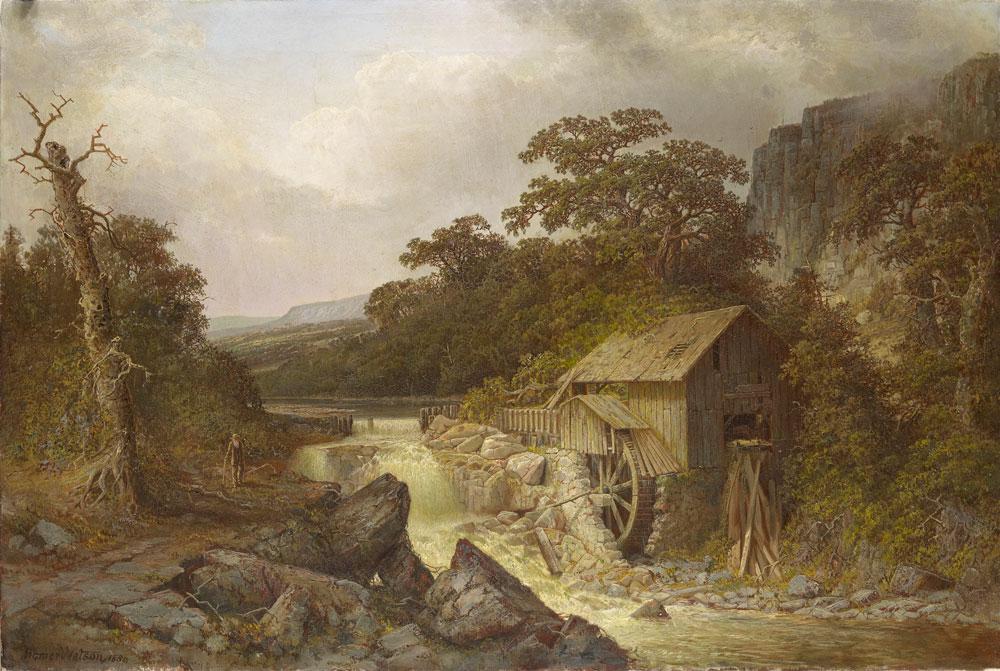
...to quit the nonsense of going in for art in a country like Canada. "Quit it and come into the office and become a businessman.”Watson continues with the story:
...on nearing home [some weeks after he had submitted the painting [The Pioneer Mill] to the Canadian Academy exhibition] I saw this gentleman on the road in front of his establishment reading the Toronto Globe. Seeing me he advanced waving the paper and putting out his hand he exclaimed, “I take it all back. Go ahead and paint. Look here,” and there it was in flaming headlines in the Globe, “Country boy paints picture bought by Princess Louise.” So that was that...Homer Watson was born in 1855 in Doon, Ontario (now Kitchener). He started to paint as a young child encouraged by his father and his aunt. He never received any formal art training, but acquired his skill and artistic sense through various artist mentors he sought as he developed his talent.
First. New. Next.The one piece by Natives ("Native" being the commonly used word for Aboriginal) artists in Beyond the Pines is a film (later transferred to video) by Brian Jungen and Duane Linklater titled Modest Livelihood, who document their hunting expedition and challenge Canadian gun laws and restrictions.
The AGM provides platforms for exhibitions, collections and experimentation in contemporary culture with a recent focus on artists and cultural producers from Indigenous, newcomer and youth communities. Through a broad range of educational programs, artist projects and other forms of critical dialogue, the AGM seeks to transcend traditional disciplinary boundaries, foster community, and provide spaces where alternative modes of thought are supported and activated in tangible ways.
Under Canada's Firearms Act, everyone who possesses or acquires a firearm must have a firearms licence, and all restricted and prohibited firearms must be registered. While the Firearms Act applies to everyone in Canada, some provisions of the Act and of the Firearms Licences Regulations have been adapted for Aboriginal people who meet all three of the following criteria:We are hard pressed to believe that Brian Jungen and Duane Linklater are indeed hunting for their livelihood, in this age when hunting has become a sport and food for nourishment is abundant. But Jungen’s and Linklater’s purpose is to show us that they have a right to this land as had their aboriginal ancestors, with which the AGM curators fully agree.
1.They must be a member of one of the Aboriginal Peoples of Canada (Indian, Inuit and Métis) or a beneficiary under a treaty referred to in section 35 of the Constitution Act, 1982.These adaptations facilitate the licensing process for Aboriginal people under unique circumstances while maintaining all the safety requirements of the Firearms Act.
2. They must be a member of an Aboriginal community.
3. They must engage in the traditional hunting practices of their community.
Contemporary Canadian artists looking at landscape must also find a way to access the ‘truth’ of a subject that is not only strongly represented in our national artistic history, but one that is both deeply political and personal. Placing contemporary work by emerging and established artists alongside that of Watson illustrates the universality of the quest to appreciate and capture the landscape in which we live.Beyond the Pines was an ambitious project attempting to unite several themes of Canadian art. This was partly responsible for its failure: trying to be everything to everyone, from European-influenced landscape painting, to spirit-influenced Canadian art, to Native Canadians' grievances, and with an open ended question about contemporary Canadian identity, in which, of course the non-Western immigrant, the antithesis of Homer Watson's world, looms large.
The AGM is engaging in a forward thinking acquisition plan reflecting the cultural diversity of the city, region, as well as the historical diversity of Canada. Public art galleries and art museums are committed to acquiring works of art from culturally diverse and Indigenous communities, however this often requires considering how their acquisition plans are aligned with their missions and mandates.There is a carefully guarded piece of information that is missing in the public announcements by the AGM. The museum was just approved to receive $325,000 for the 2017 fiscal year by the City of Mississauga's Art and Cultural Grant Program. This is a continuation of the prior seven years of six-digit grant money, starting with $271,000 in 2011, $316,000 in 2012, and $365,000 for the years thereafter upto and including 2017. This is an investment of $2412 million over a seven year period. [Grants and funding reports by the City of Mississauga for the following years: 2011, 2012, 2013, 2014, 2015, 2016, 2017,]