Saturday, May 19, 2018

Buried Treasure


By the way:

I am downloading my posts on a daily basis. That is, I am downloading the full contents of my blog on a daily basis.

Blogger "holds the right" to delete my blog and my entire writings at any given moment based on their assessment of my "hate propaganda."

Another party could also report me to blogger (and that Human Rights Commission) to have me remove, or to remove my "hate propaganda."

I recommend that all bloggers, whether on blogger or some other platform, do the same.

Private property means when you have your writing on an external drive stored in a drawer in your private property home.

But these days with the Soviet-style lynching that our government and its lackies are adopting, there could still be a "warrant" for all you information at any moment.

Then I suggest that you bury that private property in a remote place, preferably miles away from human civilization.

Thank God Canada has an endless stretch of forests!

GOOD LUCK!

Out of The Spell of R. Bruce Elder's Films


The last time I ever saw R. Bruce Elder, or communicated with him, was about three years after I left (quit) my program in Ryerson University.

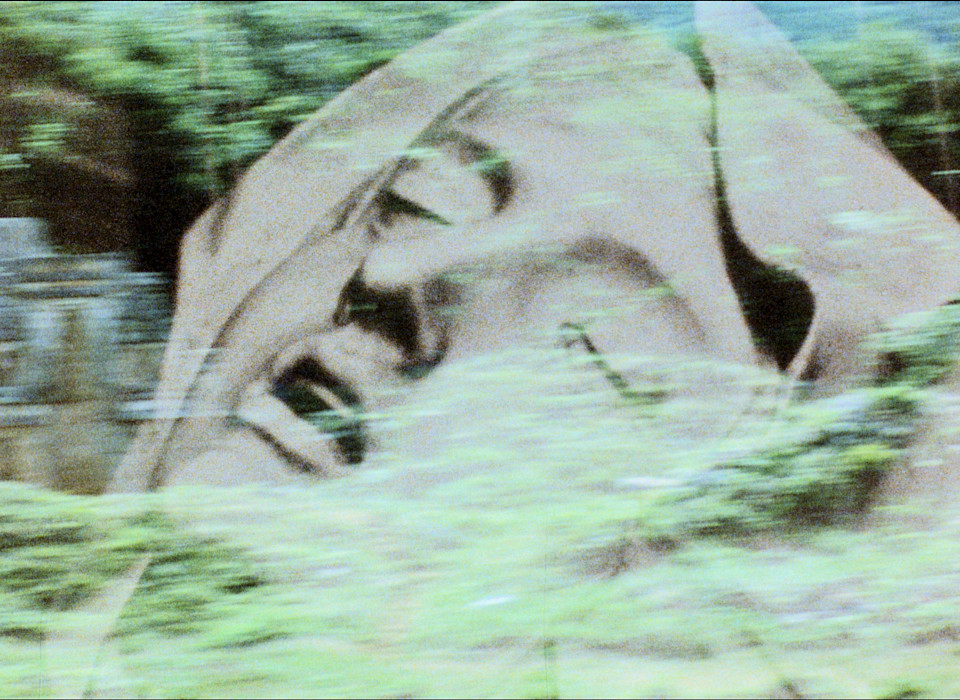
After my departure, I still went to Elder's "soirees," monthly events where he would bring together the artistic community in Toronto that had befriended him or followed his work. Sometimes we would have American or European visitors. I met Stan Brakhage there, although by then I was ready to ask questions, and I asked Brakhage why he never showed us clear and articulate images, to which he gave me no answer, or some reply that really don't remember.
I...criticized the big and formidable Stan [Brakhage] during one of his visits to Toronto, in Bruce's home, where I was a member of his "round table" group of students, faculty and artists (we met about once a week for drinks and discussions). My question to Stan [Brakhage] was similar in stance to the one I asked Bruce [Elder], of why he was destroying the image. Stan [Brakhage], for a few brief moments, didn't know what to say. I think he deflected the question and talked about something else.
[Source:Reclaiming Beauty: Destroying the Image]
I heard about this from Elder, since by then I was one of his prime "former" students, who said in a somewhat disappointed tone: "So you were asking Stan some questions."
All in all, the new Twin Peaks reminded me of the experience of watching Stan Brakhage’s experimental films projected in a small Brooklyn cinema a few years ago as they were meant to be seen: in silent 16mm, with two projectors going at once and no music, unless you counted the rhythmic, faintly Lynchian industrial noise created by the projectors running in tandem. Brakhage was a filmmaker who did in-camera superimpositions, scratched and drew on the film, and did all sorts of other things to create ribbons of abstraction that told implied stories (sometimes about his own life, sometimes about the life of the species) through mythological and hallucinatory imagery. The turnout was quite good: 50, maybe 60 people. Half the audience walked out at the first intermission, and by the end there were maybe a dozen of us left. It was one of the most profound moviegoing experiences I’ve ever had, though whether I would’ve been able to sit through all four hours of it without assistance from pot brownies is an open question. I bet Stan Brakhage would have liked the new Twin Peaks. I also bet that the majority of people tuning into the new Twin Peaks don’t want the 2017 equivalent of a Stan Brakhage film for TV. The joke’s on them, or on me, or maybe it’s on Lynch; I don’t know. The owls are not what they seem. [Source: Twin Peaks: The Return Is Riveting, Horrifying, and Patience-Taxing
Much later on about a year later, I attended a community program which had invited Elder to speak about his films. there I asked the very same question that I had asked Brakhage and for which I had received no answer. I actually didn't expect an answer this time. I just wanted to present that "concept" in a group of people who clearly were enamoured with Elder.

The answer?

"Let me just finish this point."

Elder finished his point but never got to mine.

I left the lecture as things were wrapping up but before the moderator called it over.

I saw (or heard) Elder once after that at a Toronto Film Festival screening. I still think fim is an art, and there are some beautiful works to watch.

I could hear Elder talking behind me.

I watched the film and never turned back.

I left as the credits were rolling.
For Steiner, Lucifer is the principle (or spiritual being) that tempts us with promises of “freedom,” the desire for self-expression, individualization, and an absolute creativity. Ahriman, on the other hand, is the principle (or spiritual being) that promises order and a kind of technological and corporatized efficiency that enslaves us to the subhuman, turns us effectively into machines. Between these two polarities, Steiner points to Christ as that principle which guides us through the perils of the promises made by Lucifer and Ahriman and helps us abide in the real.

When I look at our own culture, I can’t help but think that Lucifer (however one wants to understand the term) tempts us to a freedom of expression and selfhood that inevitably delivers us to Ahriman. That is, in order to “become who we really are” (or so we think) we turn to technology and scientific/medical interventions which enslave us to a lifetime of injections, prescriptions, surgeries, and technologies that inure us from the Real that inheres Creation. This is most obvious in some of the diabolical interventions foisted upon certain children in the name of freedom, but it also acts in subtle ways upon all of us.

Even though demonic possession as often depicted in film (The Exorcist, The Rite, Deliver Us from Evil, The Exorcism of Emily Rose) is certainly a reality, in general, the fallen angels work in much more invisible ways to lead us away from reality and, therefore, from Christ. It’s easier that way. I know this from experience. But, as St. John tells us, “We know also that the Son of God has come and has given us understanding, so that we may know him who is true. And we are in him who is true by being in his Son Jesus Christ. He is the true God and eternal life” (1 John 5:20).

A traditional protection against evil:

Let God arise, and let his enemies be scattered: and let them that hate him flee from before his face.
As smoke vanisheth, so let them vanish away: as wax melteth before the fire, so let the wicked perish at the presence of God. (Psalm 67:2-3)

For Steiner, Lucifer is the principle (or spiritual being) that tempts us with promises of “freedom,” the desire for self-expression, individualization, and an absolute creativity. Ahriman, on the other hand, is the principle (or spiritual being) that promises order and a kind of technological and corporatized efficiency that enslaves us to the subhuman, turns us effectively into machines. Between these two polarities, Steiner points to Christ as that principle which guides us through the perils of the promises made by Lucifer and Ahriman and helps us abide in the real.

When I look at our own culture, I can’t help but think that Lucifer (however one wants to understand the term) tempts us to a freedom of expression and selfhood that inevitably delivers us to Ahriman. That is, in order to “become who we really are” (or so we think) we turn to technology and scientific/medical interventions which enslave us to a lifetime of injections, prescriptions, surgeries, and technologies that inure us from the Real that inheres Creation. This is most obvious in some of the diabolical interventions foisted upon certain children in the name of freedom, but it also acts in subtle ways upon all of us.

Even though demonic possession as often depicted in film (The Exorcist, The Rite, Deliver Us from Evil, The Exorcism of Emily Rose) is certainly a reality, in general, the fallen angels work in much more invisible ways to lead us away from reality and, therefore, from Christ. It’s easier that way. I know this from experience. But, as St. John tells us, “We know also that the Son of God has come and has given us understanding, so that we may know him who is true. And we are in him who is true by being in his Son Jesus Christ. He is the true God and eternal life” (1 John 5:20).

A traditional protection against evil:

Let God arise, and let his enemies be scattered: and let them that hate him flee from before his face.
As smoke vanisheth, so let them vanish away: as wax melteth before the fire, so let the wicked perish at the presence of God. (Psalm 67:2-3)

Friday, May 18, 2018

Under The Spell With R. Bruce Elder's Films


Lamentations: A Monument to the Dead World
Film still
Canada 1985
Dir: Bruce Elder
437 min.

Part of 5-hour film cycle, The Book of All the Dead, made from 1975 to 1994.


I was first introduced to the Satanic forces behind the arts while studying film, and later producing my own films and videos.

I went through a semester's courses in photography, video production and digital courses before I "found" Bruce Elder the esteemed filmmaker in the department. I was enrolled as a New Media student in the Image Arts Department of Ryerson University, which was one of three programs, the other two being Film and Photography.

Elder had then a prolific film repertoire, as well as international recognition as an "experimental" filmmaker. Since then, he has won the prestigious Govern General's award for filmmaking.

But it is no accident that I "found" Elder. All dedicated students cannot but notice his controversial persona and his antagonistic position in the department. And some of us (those with a little of the rebel - or independent - spirit in us) edge close to find out why. But there is also the deadening mediocrity of the Marxist-led "instructors" who teach in the New Media stream of the department. New Media was so undefined and "new" that a hodge-podge of non-artists managed to string each other along to form a faculty. I was a "New Media" student - a revolutionary right there! And I never went to "theory" classes the second semester, only attending the practical hands-on courses in filmmaking and photography, mostly taught by technical staff. And even those I stopped by to pick up the semester's assignments and only periodically (once every few weeks) attended the class, and near the end of the semester to hand in my assignment and have it "critiqued" during a grueling two-week session (grueling because of the stupidity and non-artistic nature of the "feedbacks" which I never paid any attention to) because I had to be there.

Word gets out that Elder teaches interesting courses. So my second semester I registered for a film class which he taught.

The films he showed us were mesmerizing. His teaching manner, which he "performs" in dramatic fashion , were bewitching. We fell under his spell (well some of us did - others fled as though fearing for their lives!) .

And we watched enchanting early modern films, glittering black and white streaming celluloid by directors (film poets Elder would call them) who were just beginning to discover this new medium, as was I.

We watched rebellious sixties films by vocal and articulate filmmakers who could speak as well as they could film. We watched films by homosexual filmmakers of pederasts in all their nudity. Elder had no qualms about showing us footage of all kinds of fornitcators, sex in all its artistic glory (and gore). But these later films were messy and often ugly, a slimy disappointment after the early shimmering days of film. But by then we (well some of us) were hooked.

And Elder would show us "mature" students, those that passed the test of slime and grime and coition, his own films where he would camouflage genitals through film making devices, many of which he invented himself. We accepted all this as "art." There is a precedence of the "nude" in western art, after all!. But these were no nudes, rather flabby stomachs and drooping breasts, and other ungainly appendages protruding out at us from the giant film screen, quick and rapid, then camouflaged with props and limbs.

Perhaps all these covers were to avoid government censorship around pornnography. But it was more a complicit, hidden strategy to subliminally affect the psyche of the viewer; to mesmerize him with these reeling images, and sharp intrusions, so that he is subsumed by what he was watching, not to induce him to go out and perform the sexual act, but rather to put him in a vulnerable "aroused" state of mind, and being. He becomes open to other feelings that way, and less in control of his own. And to other forces.

Elder has written much about the occult in film. And he would introduce us to occult-creating artists and filmmakers, one, Kenneth Anger, who is an outright Satanist, and homosexual which this writer says go "hand n hand."

At first I thought that Elder was showing us what is "out there" as a responsible film professor. And that his prolific writing about such films (and art traditions) was to give us the necessary information and background as students (and artists): part art/film history, part a morality education on what to expect, part critique of a seasoned filmmaker.

But now I believe that like all modern artists who espouse modernism and its implicit rejection of God, he has delved into "the other side." With us, he was carefully cultivating followers.

Thursday, May 17, 2018

"Replacing God with Satan"

Henry Makow writes:
Freemasonry as Tool of Revolution (Communist Subversion)

Mankind is victim of an ancient satanic conspiracy. The esoteric meaning of revolution is turning the world upside down, replacing God with SATAN.

This is behind the ongoing subversion of Western countries -- racial cohesion, gender (family), national independence and Christianity. This is behind the Communist control of mass media, academia, and censorship of free speech.

Starting with the English Revolution, 1688, which led to the formation of the Bank of England (1694), and including the American (1776) French (1789) and Russia Revolutions (1918) the world has been brought under the control of the Masonic Jewish central bankers. This multi-generational Communist conspiracy is reaching fruition today with the Freemason Donald Trump in control of the US and Freemasons in power throughout the world.

"NYT: Talented poor not choosing to attend good colleges"

NYT: Talented poor not choosing to attend good colleges
Lawrence Auster
View From the Right
March 17, 2013


(Note: see in the comments a reader’s correction of my speculation that the poor, talented students of which the Times is speaking are primarily blacks.)

But if, as the Times reports, these students do not even know of the existence of better colleges in America, and they have absolutely no aspiration to attend any schools that are outside their local area, how smart and talented could they be? They appear to have very small horizongs and little knowledge of and little curiosity in the world. Don’t very smart people tend to have large horizons?. My guess is that the Times is doing its usual rationalizations for the intellectual and other deficiencies of blacks. I did not read the entire article,but I’d say that it’s fair possibility that it ends up asserting that these students are culturally and geographically isolated by racial discrimination and by the lack of special federal programs that inform them of the existence of better schools. The eternal top-priority project and moral obligation of Liberal America (America 2.0)—at unlimited cost in societal effort, taxpayers’ money, and orchestrated white guilt—is to render blacks in general as functional as whites in general. And that will never happen. And no one who makes his living in mainstream America dare say it..

— end of initial entry —


Daniel F. writes:
I saw from Steve Sailer’s post on the same article that the low-income, high-aptitude cohort under discussion is 69 percent white and 15 percent Asian. So the large majority of the kids at issue are white.
LA replies:
Thanks for the correction. But I wonder if that information was in the Times article (which, again, I didn’t read the whole of and was only making a reasonable speculation on, based on past Timesean behavor), or only in the Sailer post.
Daniel F. replies:
The racial breakdown is in the NY Times article itself, about midway through. I suspect that Sailer is right that the problem is really with white kids, since channels are in place to whisk whatever (relatively) high-aptitude black kids make it through high school (most of whom are female) into elite colleges. Such kids are in extremely high demand, as I’m sure you know. By contrast, the powers that be could not care less about smart white kids from lower middle class or working class backgrounds. [LA replies: That all makes sense, and is not surprising. But it’s still fascinating. By the way, like Mr. Spock, I never say, “Fascinating” ironically, which people often think I do, because such behavior is now so common. I never (well, hardly ever) give a compliment ironically, which, again, has become a common behavior in our increasingly cynical and nihilist age.]

I’m amazed that you are able to do as much as you are still doing with the site. Your will power is amazing. May your pain be moderated and may you continue to make good use of your time with us, however you see fit.

“Blessed shalt thou be in thy coming in and blessed shalt thou be in thy going out.” Deuteronomy 28:6.
LA replies:
Interestingly, Deuteronomy 28, in which God alternatively presents the blessings and miseries he will deliver to the children of Israel depending on whether they follow or don’t follow his ways, is the source of the quote that I used at the end of my speech, “Multiculturalism and the War against White America,” at the first American Renaissance conference in May 1994.

I said:
In Deuteronomy, Chapter 28, God pronounces the curse that will fall on the people of Israel if they fail to follow God’s law:
“Your sons and your daughters shall be given to another people, while your eyes look on and fail with longing for them all the day; and it shall not be in the power of your hand to prevent it. A nation which you have not known shall eat up the fruit of your ground and of all your labors; and you shall be only oppressed and crushed continually; so that you shall be driven mad by the sight which your eyes shall see.”

Unless America wakes up to the threat of demographic and cultural dispossession, and finds the will to resist it, the curse pronounced in Deuteronomy awaits us all.
[end of speech.]
Karl D. writes:
I agree with what you said in the initial entry. Whether they be white or black, how intelligent can these young people be if they are so provincial? I grew up in Brooklyn and Queens and I remember as a teenager there were a couple of kids I knew who had never been over the bridge to Manhattan. Imagine that! They lived a mere three to five miles away from the world’s most famous and celebrated city, and they had never been over the bridge nor had their parents taken them.
March 18

James P. writes:
I went to high school in “the provinces” (Phoenix) but not in a low-income family. Just the opposite—I attended an expensive private school. Many of my classmates attended highly selective and prestigious universities. Yet an appreciable number of them attended the local, low-prestige school (Arizona State). These people had certainly heard of high-prestige schools back East, knew people who attended them, and could afford them, but chose not to attend these schools themselves. The problem was not lack of intelligence, knowledge or money, but motivation. Some of them didn’t want to be geographically far from their parents, others just didn’t know what they wanted to do with their lives. If this problem exists at the higher end of the income spectrum, I imagine it is even more prevalent at the lower end. The article notes, “Low-income students who excel in high school often do not graduate from the less selective colleges they attend”—which indicates to me that the problem is indeed motivation, not brains. You can graduate from high school on autopilot because all your choices are made for you and then wind up floundering in college because there are too many choices.

Thus the idea that these low-income kids in the Times article are “not really” smart and talented may be wide of the mark. I suspect that the system will make a special effort to seek out and attempt to inspire unmotivated black kids, and will be more likely to let unmotivated white kids fall through the cracks. (“If you don’t take advantage of your White Privilege, we have no sympathy for you!”)
LA replies:
This is very interesting and has the ring of truth.
Your observations remind me of someone I know. He is highly intelligent and extremely articulate. He writes like an angel. He is cultivated, being deeply knowledgeable about such fields as classical music and opera.

When he told me that he had never attended college, I was, frankly, gobsmacked, meaning that I was astounded to the utmost degree of astonishment.

He was graduated from high school in a Midwestern state in the mid-1970s. Now if I heard the same story from a person who went to high school in the 1930s or early ’40s, I would not have been astounded, because before the postwar period, as we learned from the Part One of The Bell Curve, before the postwar period people with high IQ were scattered throughout every walk of life in this country; but after the war the American system of education began pushing cognitively able young people into college and the professions, especially via the SATs, which had been deliberately designed to search out the cognitively talented who previously had not gone to college.

So how did it happen that he did not attend college, and how did it happen that he spoke so well and wrote so well without have gone to college? I had never met a person lacking a college education who expressed himself so well, with a perfect command of English usage and grammar. (And readers know how fussy I am about that—I am the man who will sit up in my coffin at my funeral and correct the pastor on a grammatical mistake!)

First, he had not had any intellectual or academic interests when he was in high school. He was into crafts, athleticism, things like that. The thought of college had simply never occurred to him. Second—and this part still astounds me—not a single adult in his life, whether his parents, his teachers, or his school advisors, had ever talked to him about the idea of his going to college. He had not even taken the SATs.

Second, as for his marked intellectual abilities and accomplishments, he only acquired intellectual interests in his twenties. He must have read a great deal, and developed on his own his excellent writing abilities.

I don’t know what general lessons this story offers, as it is in my knowledge atypical, indeed, unique. I’ve told it because I find it so interesting, and because it shows a unique individual.
Posted by Lawrence Auster at March 17, 2013 11:30 AM | Send

Who Said Larry Auster Wasn't Funny!


"When he told me that he had never attended college, I was, frankly, gobsmacked, meaning that I was astounded to the utmost degree of astonishment," wrote Larry in a March 2013 post, where he felt to need to provide his own dictionary definition of "gobsmacked."

Of course this is all the while writing about a very serious issue which no-one dared (and which no-one still dares) to discuss:
Black and White race relations in America.
By the way: here is the (online) Merriam-Webster definition of gobsmacked:
chiefly British, informal: overwhelmed with wonder, surprise, or shock: astounded
I would rather a macho "gobsmack than a feline flabbergast.
I am sorry to make my communications via email. I wish I could be there with you to recount this story.

Yesterday, I was having my early morning coffee at the central square here in Mississauga, when a young man at a table next to me acted a little strange, moving from one seat to another. I asked him if the sun bothered him. "No, there's a wasp here," he replied. He then asked if he could join me. "Certainly," I said.

I asked him if he was a student at the nearby Sheridan College. He said that he had actually just graduated from high school. He's from Caledon, a town north of Mississauga, And he planned to go to a technical architectural school. He said he is skilled at drawing, and he's thinking about taking an Autocad course. I told him that was a good idea, since drawing is still important, no matter how technical these fields get. I told him I know this from experience, since I have studied design. 

He said he was off to the library just across from the fountains, after his breakfast, . 

He was pessimistic about job prospects.  "It all because of immigrants" he said to me. "The government is shipping them here, educating them, and giving them the jobs, which they take at really low salaries." I was surprised at his forthright manner. I let that go for a while.

He also said that he might go into social work. I couldn't figure out why he decided on this. Later on, I looked him up on the internet,and here is his profile. Here is what his "counselor" says:
Miss Andrew: Ian is a caring individual who works to make others happy. He struggles with putting others needs before his own, however he is getting better at asking for support when having a rough day. Another difficulty that Ian struggles with is his attention span. Ian has worked hard to come up with strategies to help with his attention and is able to focus when he needs to.
This sounds like a typical, female, "empathetic" teacher, the classic diagnoser of "Attentions Deficit Disorder," which is the great mental health fabrication of the ages, meant to put young men on a leash.

She now has this young man thinking he has some kind of psychological problem, and has pulled him into that victim's world, all geared up to help other "victims."

I told him to concentrate on the architecture studies. That these days, we need good buildings. "Look at the horrible high rises cropping up all over. Look at what we have in front of us." 

I asked him what he thought of "Celebration Square."

He liked it: "It seems a good blend of nature, design, architecture and recreation."

I agreed with him. I also said that the yellow brick is a traditional Ontario stone, mined from quarries in northern Ontario. Older Toronto homes used this brick.

"And all this glass, what do you think? Some are even falling!" I said. I told him about the Royal Ontario Museum, designed by a German architect, Daniel Libeskind, where falling glass became a joke around town.

He agreed with that too. And mentioned some other buildings in downtown Toronto where potentially falling glass has been a problem.

I told him that there are designers who are working on durable glass, and also glass that doesn't make the interiors into ovens, with sun and heat coming in. 

I went back to his original outburst of "it's the immigrants."

"What do you think of Asian students who are filling up university technical fields? It isn't enough to be skillful, it is important to be creative as well. Like the windows. To build the kind of "open" space people like these days, one should be able to invent glass that can prevent people from looking in and maintain privacy, and keep the heat from the sun turning the interior into an oven. And to make them durable and unbreakable. Do you think Chinese have this skill and creativity, and invention, to produce such kinds of structures?"

"Asians have the skills, but equally important as skill is creativity and inventions abilities, and I believe Asians aren't up to par with white students."

He looked relieved that someone was talking to him about these things. He is barely eighteen, but he looks like he had the weight of the world around him. He said his family history is of welders, iron workers, and those who managed construction sites. He got his idea of architecture from that family background.

I asked for his email and promised to send him some of my posts and articles on architecture, and the changing landscape of Toronto. I said I would like his feedback. He seemed happy about that request. I told him to hang in there, and to work at his talents. "We need good buildings," I told him.

He excused himself to go to the library.

I hope I run into him again.

I think whites are beginning to realize that they have been duped! And smart, young ones like Ian (when I asked him for his email, he actually spelled i-a-n for me, as though no-one knows how to spell that name! As though it is Mohammed, or even Kidist!) are beginning to figure this out. I think his "social work" ideas were actually to help those like him, who have been made to feel, by teachers, the media, their society, that they are no good. 

And when I think back on his forthrightness when he talked to me, I think he is reacting to the current news, the racial horror in Ferguson, the Mexican illegals in Texas and Arizona, and Islam's war on the world, and especially the West. 

I think he will figure things out.

I will send him the emails and articles I promised.

Kidist

Art Gallery of Mississauga Benefit Auction 2018 Outcome

From: "reclaimbeauty@gmail.com"
To: Online Auction Department
Date: Sun, May 13, 2018 at 7:36 AM
Subject: Art Gallery of Mississauga Benefit Auction 2018

To whom it may concern:

Please can you direct me to the site which outlines the result of the AGM benefit auction of April 26, 2018: the items sold and their buying (and estimated) cost.

I searched your site for the information but couldn't find any. All that I could find was the pre-sales information here.

Thank you,

Kidist Paulos Asrat
Artist, Designer and Writer at Reclaiming Beauty

----------------------------------------------------------------------------------------
From: Online Auction Department
To: "reclaimbeauty@gmail.com" , "Sadaf.Zuberi@mississauga.ca"
Date: Monday, May 14, 2018, 12:18:52 PM
Subject: Re: Art Gallery of Mississauga Benefit Auction 2018

Hello,

In regard to the AGM benefit Auction, please contact Sadaf Zuberi at the gallery. Her email address is Sadaf.Zuberi@mississauga.ca.

Online Auction Department

----------------------------------------------------------------------------------------
From: "reclaimbeauty@gmail.com"
To: Online Auction Department
Date: Tue, May 15, 2018 at 4:15 AM
Subject: Re: Art Gallery of Mississauga Benefit Auction 2018

Thank you for your reply.

My understanding is that auctions open to the public also post their information on their auctioneer's public website. The AGM's auction was open to the public.

Here is such an auction on your website, which provides this information on the auctioned items.

----------------------------------------------------------------------------------------
From: Tess Mclean
To: "reclaimbeauty@gmail.com" ; "Sadaf.Zuberi@mississauga.ca"
Sent: Wednesday, May 16, 2018, 11:10:01 AM EDT
Subject: Re: Art Gallery of Mississauga Benefit Auction 2018

Dear Sir/Madam,

You are correct that we do publish auction information of our own auctions. However, this benefit auction for the Art Gallery of Mississauga was not a Waddington’s auction. In support of their fundraising effort, we hosted the first portion (the online part) of the auction. The auction was completed as a live auction event at their gala, and all final transactions were handled by the AGM. We did not conduct the live portion of the auction.

Sadad Zuberi will be more than happy to assist you with the information you are looking for.

Best,
Tess McLean

----------------------------------------------------------------------------------------
From:
To: Tess Mclean
Sent: Thu, May 17, 2018 at 2:37 AM
Subject: Re: Art Gallery of Mississauga Benefit Auction 2018

Dear Tess,

Thank you for your updates and information.

Sincerely,
Kidist Paulos Asrat

"AGM rocks the boat of Canadian art"

AGM rocks the boat of Canadian art
Artists showcase the Canadian landscape through both traditional and multimedia designs
Author: Emily Mak
Photographer: Samuel Kan
Published: Sep 28, 2015
The Medium: The Voice of the University of Toronto Mississauga


The AGM was quiet when I walked in at 7:20 on a Thursday evening. But as I approached the exhibition hall, I could hear the murmur of voicesgrowing louder and louder as I approached, revealing a great turnout despite the show having only just opened its doors after the VIP reception.

“The things that orient me are the contours of the land,” a girl says as she walks through an unknown city. This poignant scene plays on the big screen that greets me when I enter. The screen shows films directed by Canadians of Aboriginal descent. The films ranged from two minutes to 46 minutes long and showcase Aboriginal people, their lifestyles, traditions, and cultures. I watch for 10 minutes and walk into the first exhibition, Beyond the Pines.

Beyond the Pines centres around the works of landscape painter Homer Watson, accompanied by eight contemporary Canadian artists. The AGM partnered with the Homer Watson House and Gallery to showcase his legacy. Watson, according to the press release, was known as “the man who first saw Canada as Canada”. Walking around the hallway displaying his work, I could see Canada as he saw it: an untamed wilderness, which is the truth both now and in the past. His Canada is vast, sombre, and uninhabited. The scenes he painted were not typically charming, yet they contained their own appeal: darkened skies, an abundance of trees, and muddy paths show a Canada before industrialization. The land before the people. A lost, lonely, yet lovely Canada.

My favourite of the contemporary artists was definitely Jennifer Carvalho. Her painting Unexpected Connections immediately grabbed my attention. It was a very simple work, just the tops of pine trees and the night sky peering out between them. Despite its mundane subject, I felt like something was about to happen. Her following work, The Ruin, shows a similar scene of dark, murky waters and the silhouettes of trees. This piece, however, just didn’t work for me. I was interested to discover that her inspiration was from cinematography and the Anthropocene, the period in time when humans began to have an impact on ecosystems and geography, but The Ruin contrasted starkly against Watson’s untouched landscapes.

Across from the refreshment stand, another small crowd gathers. They stand in admiration of Mary Grisey’s installation, Sung from the Mouth of Cumae. The story behind the work is interesting—Cumae was an ancient Greek city located in Italy, near Naples. In some stories, the city contained the entrance to the underworld. But it is best known for the Cumaen Sibyl, a priestess who sung prophecies from the mouth of a cave, hence the title of the exhibit. At the centre of the room is an abstract mass of clay. There is a hole, like a mouthpiece, from which strange sounds emit. Surrounding the clay object are pieces of fabric of various materials and textures that hang from the ceiling. Even without knowing the backstory, the installation invokes an eerie, heavy atmosphere. I stand there and the pieces of cloth seem to stand with me, listening, suspended in midair.

As I leave the AGM, the murmur of discussion rises. The AGM’s mandate “to bring art to the community and the community to art” has certainly been demonstrated tonight. The three exhibitions serve as an ode to Canada and Canadians have shown up to discover and appreciate it.

Wednesday, May 16, 2018

White Discrimination (Against, that is)

Below is a post I wrote in 2017, a year after I attended a panel discussion based around the then on view Homer Watson exhibition at the Art Gallery of Mississauga: Double Whammy Discrimination: Diversity at all Cost Even if it Means Empty Museums.

I had asked a normal, art and culture related question, and I believe this was what was (is) perceived as "being difficult" by AGM's director and curator Mandy Salter, who recently sent me an email with the "clarification" on my ban from the AGM's "premisese":
As you have continued to criticize, defame and generally create an unsafe space for many at the AGM
Here is the pertinent part of the 2017 post:
I asked Reinhard Reitzenstein, one of the panelists [at the AGM function], who is a pretty good sculptor (and who is white), if he believes that Homer Watson's standards, and art, set an example for artist in general or if his English (Western) heritage is insignificant. This was of course not what I was asking, as Reitzenstein clearly understood. I was asking him if he thought that Watson's work was good, was superior.

Reitzenstein talked for a bit and finally admitted that he doesn't want to emulate the now archaic art of Watson. We are in the modern age after all!

So, irrespective of technical expertise, artistic beauty, or individual ingenuity, as long as an artist follows the archaic art of Watson, his work can not be deemed "good."


Double Whammy Discrimination: Diversity at all Cost Even if it Means Empty Museums


In our postmodern era I would be defended as a discriminatee.

My non-White, Third World background would automatically place me in the "victim" pigeonhole where my word against my white "antagonist" would preside, NO MATTER WHAT.

That is, until I start to defend this "white" monster and say he is the one being discriminated against.

Then the wrath, slow though it may come, is full on!

Especially if it is a white women who is regulating the discrimination channel.

This happened to me recently after I attended (and participated in) a lecture at the Art Gallery of Mississauga, where a group of artists were to discuss the works of Homer Watson, a late 19th early 20th century painter from southern Ontario.

I wrote about the exhibition and the panel discussion here: Homer Watson, Native Son. But I left out my questions to the panel.

As wrote in my post:
Last year, I attended a panel discussion on the exhibition Beyond the Pines: Homer Watson and the Contemporary Canadian Landscape at the Art Gallery Mississauga. I had visited the exhibition numerous times, going through Watson's work one by one, to study his technique, his evolution as an artist, his views, his concerns, and his Canada.

The exhibition also displayed works by contemporary Canadian artists to bring this pine "narrative" to the fore. Some were reasonably good, but none reached the overall skill and beauty of Watson's paintings.
I was gong to leave it at that, just a personal observation (not naive or untutored, since I have a solid background in the arts), hoping that I would gain some insight from these artists.

But I should have known better.

The catalogue the AGM produced for this exhibition prefaced with this objective:
Contemporary Canadian artists looking at landscape must also find a way to access the ‘truth’ of a subject that is not only strongly represented in our national artistic history, but one that is both deeply political and personal.
So the "truth" of a subject is now mandated to "represent" not just our nation "objectively" but has to incorporate political and personal views as well.

A tree is not a tree is not a tree, to paraphrase Gertrude Stein .

I asked Reinhard Reitzenstein, one of the panelists, who is a pretty good sculptor (and who is white), if he believes that Homer Watson's standards, and art, set an example for artist in general or if his English (Western) heritage is insignificant. This was of course not what I was asking, as Reitzenstein clearly understood. I was asking him if he thought that Watson's work was good, was superior.

Reitzenstein talked for a bit and finally admitted that he doesn't want to emulate the now archaic art of Watson. We are in the modern age after all!

So, irrespective of technical expertise, artistic beauty, or individual ingenuity, as long as an artist follows the archaic art of Watson, his work can not be deemed "good."

This is the tired discussion of art which has reached now such a comical zenith that works are exhibited in museums and galleries simply based on their mockery (and not simply rejection) of this western tradition. And many artists have become wealthy doing so.

But the public isn't with the program, which is why the Art Gallery of Mississauga has to go through loopholes to get people to visit its exhibitions, including set up committees and workshops to "study" this lack of museum attendance.

I received a "newsletter" email about a year after this exhibition from the AGM, one of the few I have received from them to invite me to participate in two workshops ttled: Collections Through The Prism of Diversity Series (here are day one and day two of the schedules):

But I was given about a week's notice for a two day workshop, where would have had to pay $250/day to attend. My first reading of the email, before I saw the dates, was to figure out ways could come up with the sum, including asking for a reduced fee. Soon after, I realized that I was put on the list as a "visible minority" participant.

Here is the email I sent the gallery:
I can only surmise from this late notification that the AGM is getting some kind of monetary benefit from this "email list" which it seems to use haphazardly to meet with its program mandates.

In my case, the mandate appears to be that of a minority female artist who can participate in the discussion on how to add more "diversity" into the art collections of the region.

Through your lack of appropriate notification, you indeed lost the participation of a minority female artist (myself) who would have made a unique and substantial contribution to this discussion.
And the reply I received from Mandy Slater the director:
The AGM prides itself on its high professional standards and its strong relational manner. We provide a safe and accountable space for our diverse staff, volunteers, artists and audience. All of this supports the democratic nature of the work we do at the AGM.


Moving forward, if you are able to visit the AGM in a congenial and supportive way I encourage you to do so. If at any point in the future, you visit the AGM and create an unsafe, critical and or threatening space, we will contact security who will request that you leave the premises. If you do not comply they will be entitled to further legal action under the Ontario Trespass to Property Act. I have cc’d senior Security Officers at the City of Mississauga on this and other incidents regarding inflammatory and false statements made by yourself.

The AGM prides itself on embracing diversity and inclusion as a core institutional value. We strive to create an accountable and inclusive space that supports like-minded individuals.
Diversity counts at all costs, even if it means getting the "diverse" complainant out the door!

The irony of the AGM's position of course doesn't occur to its staff: that they are discriminating against me (shutting down my "voice" ) in order that they might continue with their program is exactly what they are accusing the white inheritors of Homer Watson.

This time though, they have found a whole different story: An "ethnic minority" who supports a white tradition!

"Sheep May Safely Graze"


Homer Watson, 1855-1936
Pine Woods Near Doon
oil on board
6.5 x 9.25 in


J. S. Bach
Aria: Schafe können sicher weiden (Sheep may safely graze)
From: Cantata BWV 208: Was mir behagt, ist nur die muntre Jagd (The lively hunt is all my heart's desire
Composed: 1713

Soprano Gillian Fisher
With the King's Consort
Conducted By Robert King
Recorded 1987

Tuesday, May 15, 2018

Excellence is in the Asterisk

Have a look at the Art Gallery of Mississauga's main events page outlining their current programs:
Contemplative Design: Speaking to Ancestors through Sacred Object Creation | Thursday, May 10, 5:30 - 8:30 PM | Glass Pavilion | REGISTRATION

Using a process that we call Contemplative Design*, together we connect through ceremony. Facilitated by MeLisa (Jet Feather) Moore and nisha of SOMA Ayurveda + Integrative Wellness, participants will be guided on an energetic journey of time travel, meditative creation process, and opportunities for intentional connection to ancestors and ancestral lands through the process of designing a sacred healing object.
The asterisk (which I have magnified) is an important indication that a more expanded piece of information or an explanation of some kind is available where the reference to the asterix is located. I.e.: What is Contemplative Design?

This paragraph is actually a truncated version of a much fuller piece on the Eventbrite: "One platform to help you build, manage, and grow your events," which identifies the added information indicated by the asterisk. (Read the full message here or below.)

How can such a crucial piece of information go unnoticed and uncorrected on a city's main art gallery's website? The AGM has posted a collection of staff on its "about us" page. How could no-one pick up on the error?

Actually there is a better question: How can whoever was writing and editing this page make such a "small" but important informational mistake?

It makes me wonder about the other errors that abound in the AGM's full and large, Canadian government funded repertoire.


Here is the full message on Eventbrite:
Holistic Design Village presents:

Contemplative Design: Speaking to Ancestors through Sacred Object Creation
Using a process that we call Contemplative Design*, together we connect through ceremony. Participants will be guided on an energetic journey of time travel, meditative creation process, and opportunities for intentional connection to ancestors and ancestral lands through the process of designing a sacred healing object.

Together we will cultivate sacred space, share ancestral wisdom through the power of object, and use our sacred healing objects as a tool to lovingly communicate with the ancestors of our past, in order to support our experiences in the present. We will also collectively create a time capsule filled with sacred healing objects that participants create along with messages to communicate with our future selves and future generations. We close the ceremony with planting the time capsule and a short sacred sound session. Collectively dreaming through heart + spirit.

*Contemplative Design process and term created by MeLisa Moore of HDV/SOMA. Holistic Design Village is a segment of SOMA Ayurveda + Integrative Wellness

5:30 PM registration and refreshments
6:00 PM to 8:30 PM workshop
Please note event location: Glass Pavilion, Mississauga Celebration Square
Facilitator Bios
MeLisa (Jet Feather) Moore
is the co-founder and co-director of Soma Ayurveda and Integrative Wellness. She is an integrative health and wellness practitioner, Earth-based medicine woman, facilitator, writer, multi-disciplinary designer/inventor and sacred sound musician. Her work is rooted in the intersectionality of spirituality, futurism, synergetics, traditional healing practices, racial-economic equity and unity, and Transpersonal + Buddhist Psychology. She is also a researcher/designer of alternative education and economic models and loves using design and STEM for social entrepreneurship development. Her life, root Tibetan master guides, Peruvian Elders, her West African + Cherokee ancestors, Mother Earth, animal allies, main collaborator nisha ahuja, and former classroom students, along with many others, have been invaluable supports in her journey and development. She loves to support people in going deep in their healing and spiritual journeys along with re-uniting people with their gifts and personal power. She does this through Deep Racial Healing Coaching, Spiritual Healing Guidance, Earth-based Energy Work, Therapeutic Sound, Creative Coaching, and Shamanic Healing. MeLisa (Jet) is author of Love Notes to Everyone: Healing Contemplations for Deeper Living, Loving, and Liberation and children’s book Adventures of Bun Bun: Design, Play, Meditate.

nisha has supported hundreds with Ayurvedic Medicine + Bodywork, Therapuetic Yoga, Attmic Energy Healing + Reiki, Sound Healing, ancestral healing, creative movement + theatre creation, and a range of wellness and equity-centered workshops. nisha is co-director of Soma Ayurveda + Integrative Wellness, a social enterprise for wellness, education + equity, co-founded alongside MeLisa (Jet) Moore who has contributed to nisha’s spiritual journey and understandings of social equity immensely. nisha is graduate of the Centre for Ayurveda and Indian Systems of Healing (Toronto) and York University Theatre and International Development (Toronto), and has trained in a Reiki (Master Level) with Varsha & Ravi Hooja (Bombay), Attmic Healing with Manav Ji Sahaj (India), and Yogic Medicine at Swami Vivekanada Ashram (Bangalore India). As a theatre artist nisha has worked internationally and her plays include Yoga Cannibal, Un-Settling (Canadian Theatre Review, January 2016), Cycle of a Sari (excerpt in Refractions: Solo, Playwright Canada Press, 2014), and 30 People Watching co-written with Amelia Sargisson (ReView: an anthology of plays committed to social justice, 2016). nisha’s practice is dedicated to dissolving the boundaries between art, traditional medicines, ceremony and spirituality, and social equity and believes healing practices are revolutionary and fundamental to our collective liberation.

Have questions about Contemplative Design: Speaking to Ancestors through Sacred Object Creation ? Contact Art Gallery of Mississauga

Invocation of the Ancestors


Moon Wall Hanging: Gibbous-Crescent
Call in the energy of the moon and grounding in the cycles of change. Waxing Gibbous Moon opens up expression, growth, and creativity, while Waning Gibbous opens up inspiration and service. The moon is the powerful manifestor of cycles and transitions. [Source of image and text: Soma Ayurveda + Integrative Wellness]


The Art Gallery of Mississauga is hosting a workshop to guide participants:
"...on an energetic journey of time travel, meditative creation process, and opportunities for intentional connection to ancestors and ancestral lands through the process of designing a sacred healing object."

Here is the announcement on AGM's current main page:
Contemplative Design: Speaking to Ancestors through Sacred Object Creation | Thursday, May 10, 5:30 - 8:30 PM | Glass Pavilion | REGISTRATION

Using a process that we call Contemplative Design*, together we connect through ceremony. Facilitated by MeLisa (Jet Feather) Moore and nisha of SOMA Ayurveda + Integrative Wellness, participants will be guided on an energetic journey of time travel, meditative creation process, and opportunities for intentional connection to ancestors and ancestral lands through the process of designing a sacred healing object.
And here (also posted below) is a more complete biography of the two "facilitators":
MeLisa (Jet Feather) Moore is the co-founder and co-director of Soma Ayurveda and Integrative Wellness. She is an integrative health and wellness practitioner, Earth-based medicine woman, facilitator, writer, multi-disciplinary designer/inventor and sacred sound musician. Her work is rooted in the intersectionality of spirituality, futurism, synergetics, traditional healing practices, racial-economic equity and unity, and Transpersonal + Buddhist Psychology. She is also a researcher/designer of alternative education and economic models and loves using design and STEM for social entrepreneurship development. Her life, root Tibetan master guides, Peruvian Elders, her West African + Cherokee ancestors, Mother Earth, animal allies, main collaborator nisha ahuja, and former classroom students, along with many others, have been invaluable supports in her journey and development. She loves to support people in going deep in their healing and spiritual journeys along with re-uniting people with their gifts and personal power. She does this through Deep Racial Healing Coaching, Spiritual Healing Guidance, Earth-based Energy Work, Therapeutic Sound, Creative Coaching, and Shamanic Healing. MeLisa (Jet) is author of Love Notes to Everyone: Healing Contemplations for Deeper Living, Loving, and Liberation and children’s book Adventures of Bun Bun: Design, Play, Meditate.

nisha has supported hundreds with Ayurvedic Medicine + Bodywork, Therapuetic Yoga, Attmic Energy Healing + Reiki, Sound Healing, ancestral healing, creative movement + theatre creation, and a range of wellness and equity-centered workshops. nisha is co-director of Soma Ayurveda + Integrative Wellness, a social enterprise for wellness, education + equity, co-founded alongside MeLisa (Jet) Moore who has contributed to nisha’s spiritual journey and understandings of social equity immensely. nisha is graduate of the Centre for Ayurveda and Indian Systems of Healing (Toronto) and York University Theatre and International Development (Toronto), and has trained in a Reiki (Master Level) with Varsha & Ravi Hooja (Bombay), Attmic Healing with Manav Ji Sahaj (India), and Yogic Medicine at Swami Vivekanada Ashram (Bangalore India). As a theatre artist nisha has worked internationally and her plays include Yoga Cannibal, Un-Settling (Canadian Theatre Review, January 2016), Cycle of a Sari (excerpt in Refractions: Solo, Playwright Canada Press, 2014), and 30 People Watching co-written with Amelia Sargisson (ReView: an anthology of plays committed to social justice, 2016). nisha’s practice is dedicated to dissolving the boundaries between art, traditional medicines, ceremony and spirituality, and social equity and believes healing practices are revolutionary and fundamental to our collective liberation.

Monday, May 14, 2018

Belly Dance and Genuflections

Disclosure:

I used to be part of a belly dance group. I was good. I spent about two years learning the ropes. Near the end of my time there, after some of our regular recitals, people would come up to me telling me how much they enjoyed my dancing.


I am the one "in focus" in the back row, far right

But the woman who ran the show, Hilary Shaw, who gave herself an Arabic name, Yasmina Ramzy, never quite liked me.

Perhaps it is because she knew I was an Ethiopian Christian. Or maybe because I never really behaved like a lackey - I was quiet and reserved.

Yasmina, despite her "Egyptian" name, was not really into Islam. She preferred the pagans of the pre-Islam cultures. She would dance to Ishtar and other goddesses.


Yasmina Ramzy in an invocation of the Moon Goddess


One day, I just up and quit. I had had enough: of being delegated to the back row, of dancing to godheads I didn't know, and of my final admittance (to myself) that this was an inferior dance: not like the ballet I spent years mastering during my pre-teen years, nor like the various American folk (square) and ballroom dances I performed in later years. And certainly not like the structured modern dances (where I also gained audience fans) while studying at the University of Connecticut in my mid-twenties and where I joined a community dance group.

Now, many years later, Yasmina Ramzy, aka Hilary Shaw, continues to genuflect to pagan goddesses, which my spiritual instincts had naturally abhorred and rejected.

Paganism is here to stay. It has been mulling around our culture for decades. Now "multiculturalism" and a covert dismissal of Christ are allowing it to germinate. It, along with its protector Satan, has (almost) come out into the open.

Which it will do unless we stop it.