
Although I blog about race immigration and other similar cultural and societal phenomena of this modern world, I'm beginning to think we're beyond that now.
I'm still working through the idea that these issues are a detraction or some kind of shield covering up the real thing: A gradual movement away from God and towards Satan.
Films (as I discussed here and will elaborate on the post here) are now boldly and aggressively showing us "the other side."
One of my theories is that film has always been a preferred medium for the Devil to infiltrate society. It began with the early filmmakers and how they understood this capacity, and some used it with great finesse and beauty. I was part of the group which watched and analyzed these films until I abruptly left - never to turn back - after I finished my film program.
This particular moment occurred after I attended a lecture where one of my professors was presenting. By then I had understood his ideas and ambitions. I was, one could say, a preferred student. I worked two summer jobs with him. I learned much in the process. I was an avid student, never missing class, film demonstrations, and local festivals and events. I realized, after I left the program (that departure too was somewhat dramatic though not a full cutting off of the strings), I was just as much a "consumer" as a "creator" of these worlds.
This episode too will make for an independent post because that is when I began to really see the demonic in contemporary art.
Well forget film for a while! The God-rejecting world has now been sabotaged via immigration, multiculturalism and equality (of cultures) into accepting alien gods and beliefs, and has become a conduit for this nefarious side.
The program The Social from Canadian Television (CTV) airs daily and aspires to be "The View" of Canada.
They bring in authors, cosmeticians, fashion followers, politicians and other experts on their show. Once in while they bring in exercise coaches. And they seem to have a preference for yoga-type exercises.
In the most recent episode, they brought in a "mindfulness" expert for children. I realized right away that this had something to do with yoga and mind control.
I wasn't wrong.
There is a video of the interview as well as a long article explaining "mindfulness" on The Social's website.
Here are excerpts from the article:
What is mindfulness?The last section, How to bring mindfulness into the home, gave me a flash of realization.
Being mindful is the practice of intentionally living in the present, without judgment and with gratitude...It is often practiced through various forms of meditation (e.g., sitting, walking, eating, etc.). It has been shown to reduce stress and anxiety, increase self-awareness and awareness of others, and promote self-regulation and kindness to self.
How does it work for kids?
Mindfulness can be adapted for kids...For instance, it may be a challenge for a child to sit in silence and focus on his/her breath. But, if we were to pair it with a visual of a balloon inflating and deflating or some other object rising and falling, that would help.
[...]
There is as great book called Mindful Games by Susan Greenland that has a bunch of creative mindfulness activities. But, the best way to teach mindfulness is to practice it yourself and just be present with your child, engaging in activities with no distractions. Talking aloud about your present feelings and sensations is also helpful.
Is it best suited for certain ages?
With some creativity, children as young as three could likely participate in some sort of mindful practice/activity (e.g., going on a walk and recognizing colours, smells, sensations, etc.). Again, mindfulness is any activity that keeps a child in the present moment.
[...]
Should mindfulness replace discipline?
Kids still definitely need consequences for their actions, because that is how real life works. If you steal, you can get arrested. If you lie to your friends, you may lose them. Mindfulness is more of a proactive approach to self-regulation and insight, whereas discipline is a reactive approach. Discipline is meant to be used as a teaching tool to show children not to repeat their behaviour. Although punishment can be effective, research shows that the best way to change behaviour in fact is not through punishment, but positive reinforcement. So that is acknowledging and encouraging the behaviours you want to see.
[...]
How to tell if your child has anxiety
Some signs of anxiety include: bodily aches with no known medical cause (e.g., headaches, stomach aches), difficulty sleeping/eating, frequent crying about school/tests/performance, voicing fears/concerns, avoidance of school/activities, difficulty separating from the parent, etc.
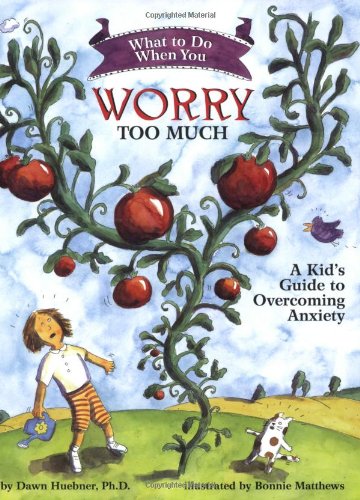
As a parent if you notice these signs, first talk to your pediatrician/family doctor to rule out any medical factors that may be impacting your child's mood or behaviour. Some parents may feel comfortable addressing anxiety at home. There are many books available to use as a resource (e.g., What To Do When You Worry Too Much: A Kid's Guide to Overcoming Anxiety by Dawn Huebner). For more severe cases, parents should seek support from a professional (e.g., psychologist, psychiatrist).
The benefit of yoga and meditation rooms
Yoga is a great way to practice mindfulness through movement. I have often seen teachers engage in yoga practices after recesses as a way to transition from outside play to inside work...Yoga involves deep breathing and exercise which are two things that are associated with stress reduction and positive health overall. Meditation rooms could also be helpful. Already many schools have rooms or areas to allow children to “cool down” when they are escalated. A dedicated room for meditation is a good way of proactively practicing mindfulness.
How to bring mindfulness into the home
Personally, I like to practice mindfulness first thing in the morning, sometimes even before I get out of bed. Before I check my emails or get lost in thought about what I have to do today, I take 10 minutes to focus on my breath. I find it sets the tone for the day and makes it seem less overwhelming. You could try to incorporate it into your morning routine with kids or even before bed. As a family, finding the time to share what we are grateful for is also helpful. Ultimately though, if you want to incorporate mindfulness into your household, you start with your own practice. I’m sure once you start to see the benefits in yourself, you will find ways to extend it to your family.
"Personally, I like to practice mindfulness first thing in the morning, sometimes even before I get out of bed," writes this woman in the article.
These are the moments for prayer. "Lord keep watch over me during the day." And especially for children. "Mindfulness has taken over God!" I exclaimed (silently).
"I take 10 minutes to focus on my breath. I find it sets the tone for the day and makes it seem less overwhelming."
She has pushed aside our biblical Christian tradition of supplicating to God, praying to God, keeping God near us at all times to help us set the world right for us, or at least to protect us. By doing so she has allowed a gaping void to develop in her spiritual life which she has filled by these mindfulness programs.
And she passes on this "knowledge" to innocent the children.
The woman hardly goes through the history of mindfulness, but starts her introduction with:
"Well mindfulness is a term we're hearing more and more about these days, although it has been around for some time, with its roots in Buddhism."
There you have it.
Buddhism isn't some benign exercise program attained through yoga and meditation. It is a full-blown spiritual and religious practice.
This is the way that young children are being pulled into this nefarious anti-God realm.
Matthew 19:14:
But Jesus said, Suffer little children, and forbid them not, to come unto me: for of such is the kingdom of heaven.